 dailyupdate4u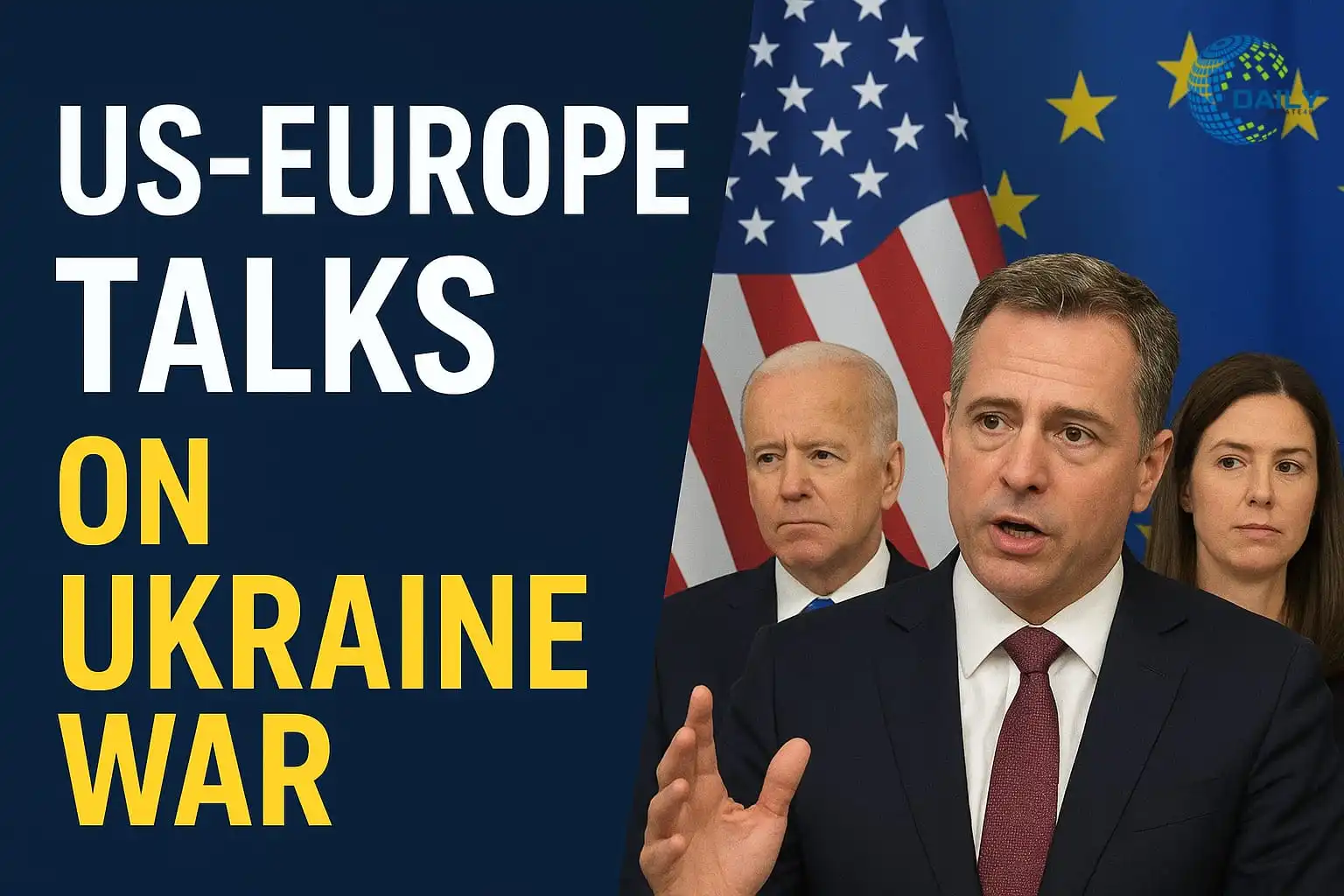
The Russia-Ukraine war, since 2022, has transformed global politics, security, economy, and the strategic balance of power. The war has not only impacted the geopolitics of Europe but has also reshaped the relationships between superpowers like the US, NATO, Russia, and China. In search of a solution to this conflict, representatives from the US, Ukraine, and major European countries met in Geneva, where they discussed potential strategies to end the war.
This meeting is also significant because US President Donald Trump has drafted a 28-point peace proposal, reportedly aimed at ending the war. However, this plan has faced significant disagreement among European nations and Ukraine.
This blog provides a detailed analysis of the reasons, outcomes, challenges, and geopolitical implications of this meeting.
➡️ Background of the War
The Russia-Ukraine war began in February 2022 when Russia launched a major military offensive, including a large-scale attack on Kyiv, the Ukrainian capital. Russia claimed this action was necessary to prevent NATO expansion and address perceived threats to its national security.
Key Objectives of the War
Side Objectives
Russia aims to prevent Ukraine from joining NATO, to consolidate control over the eastern regions of Donbas and Crimea
Ukraine : To defend sovereignty and independence, reconstruction, and international support
US/Europe European security, balancing Russia’s military power, and defending democratic values
The war has resulted in thousands of deaths, millions of displaced civilians, and billions of dollars in economic damage.
➡️ Why is the Geneva Meeting Important?
The US and Europe have attempted ceasefire efforts several times before, but this discussion is different. Reasons:
✅ America’s new political strategy
✅ Europe’s war fatigue and energy crisis
✅ Lack of weapons and funds for the Ukrainian army
✅ Russia’s increasing military dominance
The meeting focused on the American proposal, which reportedly included the following points:
➡️ Main elements of the proposal
Ukraine should consider ceding some disputed territories to Russia
Ukraine will not join NATO
A security zone will be created along the borders
Western countries will assist in reconstruction after the war ends
A joint commission will monitor the peace agreement
➡️ Disagreements from Europe and Ukraine
The European Union stated that this plan could harm Ukraine’s interests because:
Ceding territory is a loss of national sovereignty
It could boost Russia’s morale and increase the risk of future attacks
It would weaken democratic structures
Andriy Yermak, Head of the Office of the President of Ukraine, said:
“Ukraine will not trade its land; victory is our condition for peace.”
➡️ Tensions arising from the meeting
Three major points of contention emerged after the meeting:
Issue Perspective
Territorial agreement US favors a flexible approach, Europe and Ukraine strongly oppose it
Security Management Europe wants strong NATO security
Political pressure , The US wants to present this as its strategic achievement
Many European countries fear that such an agreement would allow the US to shift its security priorities towards Asia (China-Taiwan conflict), leaving Europe isolated.
➡️ Impact on World Politics
Economic Impact
Europe is already facing an energy crisis
The Trump administration is focusing on the domestic economy
The continuation of the war affects global trade and supply chains
Military Impact
NATO countries’ defense budgets are continuously increasing
The Russia-China alliance is strengthening
Balance of Power
Group Strategy
USA, stop the war and focus on the Asia region
Europe wants to secure its security framework
Russia is to consolidate the territory gained
China to benefit from the perceived decline in American influence
➡️ Will this meeting end the war?
A ceasefire is possible, but there are many challenges
Neither side wants to accept defeat
Russia’s demands are harsh
The Ukrainian people consider a territorial agreement a betrayal
Europe is divided
The US wants to make quick decisions due to electoral pressure
Potential Future Scenarios
Situation Probability
Limited agreement through negotiations, Medium probability
Escalation of the conflict: High risk
Weakening of Western military power is Possible over time
Increased influence of Russia and China. Very high probability
➡️ Conclusion
This meeting in Geneva is a step towards ending the war, but reaching an agreement will be extremely difficult. The US wants the war to end so it can focus its strategy on the Asia-Pacific, while for Europe and Ukraine, it has become an existential question.
Therefore, this meeting is not the end of the war, but rather the beginning of a new phase in the diplomatic struggle.