 dailyupdate4u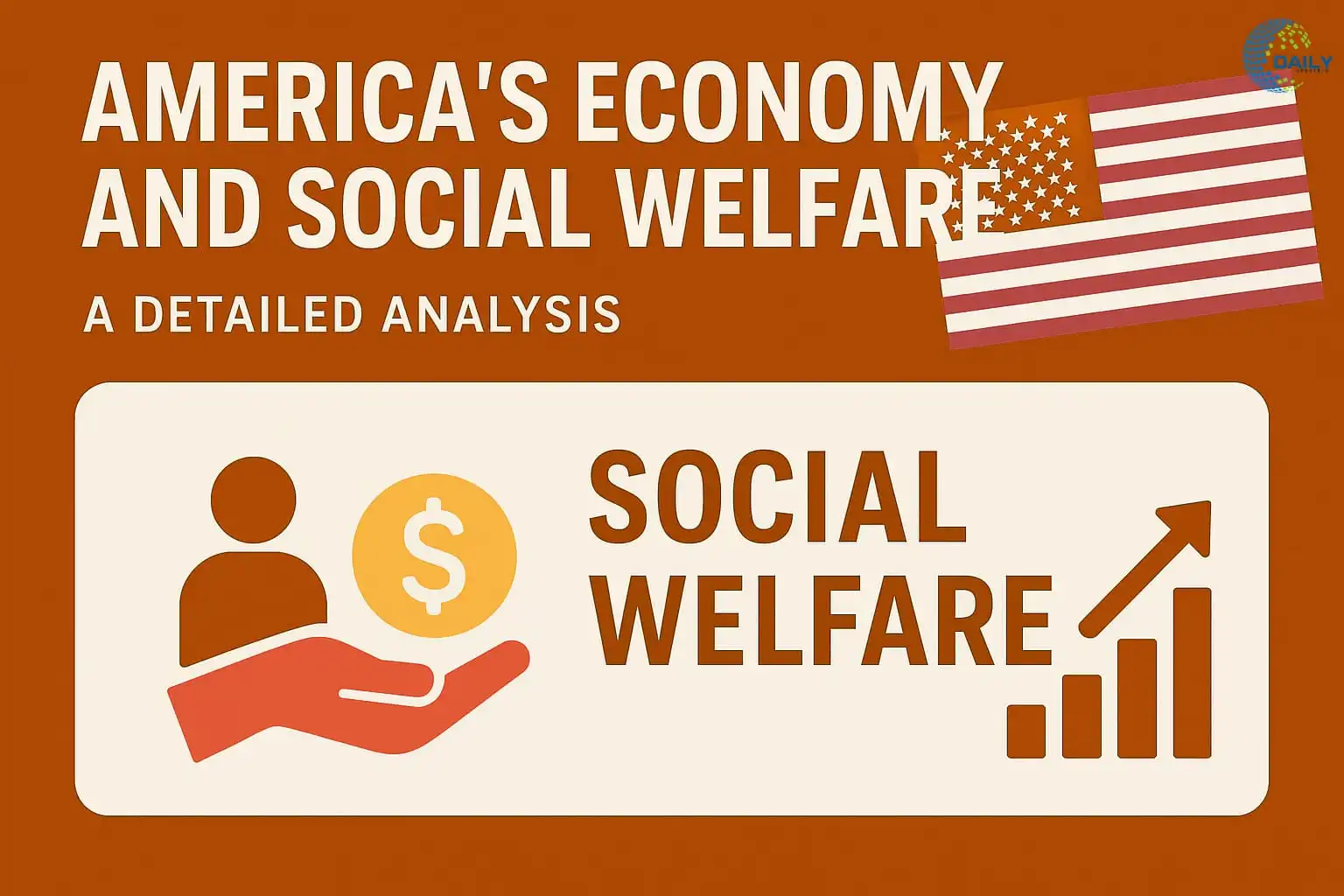
The US is known as the world’s most powerful and influential economy. But behind this economic strength lies not only industry, technology, military might, or global power, but also a crucial pillar—the social welfare system. This system works with the goal of ensuring that every citizen, regardless of their income or socioeconomic status, is not deprived of the necessities of life—food, health, education, and a dignified life.
The US social assistance system is not just for the benefit of the poor; it also plays a crucial role in maintaining the stability of the national economy, consumer spending, employment, and production. When the economy goes into recession, this system helps protect the country from a deeper crisis. In economic terms, it is called the Automatic Economic Stabilizer.
However, the US social assistance system currently faces numerous challenges: financial pressures, political conflicts, work mandates, budget cuts, and administrative complexities. In this context, it’s essential to understand how the US social welfare system works, its history, its impact on the economy, and the need for reform.
➡️ History of US Social Assistance
The organized welfare system in the US began during the Great Depression of the 1930s. Unemployment and the plight of poor families were so dire that it became clear that a market-based economy alone could not guarantee citizens’ security and a dignified life.
During this crisis, President Franklin D. Roosevelt introduced the Social Security Act in 1935. This law created a formal assistance system for the elderly, the unemployed, the disabled, and poor families.
Over time, various policy changes occurred.
✅In the 1960s and 1970s, the healthcare programs Medicare and Medicaid were launched.
✅In 1996, the Welfare Reform Act was enacted, and Temporary Assistance for Needy Families was introduced.
✅SNAP was modernized to reduce poverty and hunger.
Thus, today, the United States has a complex but extensive system of social assistance that impacts the lives of millions of people.
➡️ Major Social Assistance Programs in the United States
✅Supplemental Nutrition Assistance Program
This is America’s largest food assistance program. Its purpose is to provide food to low-income families.
⏺️Beneficiaries are given an electronic card.
⏺️It can only be used to purchase food and staples.
⏺️This program supports healthy living and nutrition.
SNAP not only helps fight hunger, but also strengthens rural businesses, the food industry, and retail markets.
➡️Social Security (Old-age Pension and Disability Scheme)
This program provides financial security to the elderly, widows, orphans, and individuals with disabilities. Nearly every American citizen benefits from this program in some form or another during their lives.
✅Pension after retirement
✅Disability benefits
✅Death benefits and family assistance
Today, Social Security is the largest government expenditure in the American economy, helping to keep millions of families above the poverty line.
➡️Medicare and Medicaid
⏺️Medicare — Health benefits for the elderly
⏺️Medicaid — Medical assistance for low-income families
Health care in the United States is very expensive. Without these plans, millions of people could be affected by health crises.
➡️Unemployment Insurance
This provides temporary income to those who lose their jobs. This
⏺️Maintains families’ financial stability
⏺️Maintains market spending during recessions
➡️Temporary Assistance for Needy Families
This program provides cash financial assistance, but for a limited period. Its purpose is to make people self-reliant.
➡️The Impact of Social Assistance on the Economy
Opponents of social assistance argue that government assistance is a burden on the economy. But the reality is quite the opposite.
✅ Consumer spending increases
Those who receive aid immediately use the money for food, clothing, and essential services. This
⏺️Increases shopkeepers’ income
⏺️Increases production in industries
⏺️Creates employment opportunities
✅ Saves the economy during a recession
When the market slows
⏺️Unemployment rises
⏺️Families stop shopping
But government aid prevents this—what economists call an automatic stabilizer.
✅ Poverty is reduced
Thousands of families rise above the poverty line, leading to
⏺️Reduced crime
⏺️Improved education and health
⏺️Increased work capacity
✅ Current challenges
America’s social assistance system is facing many difficulties.
✅ Political disputes
The two major parties have different ideologies.
⏺️One party wants to reduce the assistance system.
⏺️The other party wants to expand it.
✅ Budget cuts
Funding for programs is sometimes reduced due to economic pressures.
✅ Strict eligibility rules
Many people who are truly in need are unable to access benefits.
✅ Social stigma
Many people think seeking assistance is shameful, so they don’t apply.
➡️ Possible Solutions for Reform
✅ Universal Basic Income
Providing everyone with a guaranteed monthly income—without conditions—can reduce poverty and inequality.
✅ Work + Education Model
Providing beneficiaries with skills training to enable them to become self-reliant.
✅ Simplifying the Process
Less paperwork and a digital system will reach more people.
➡️Conclusion
America’s Social Assistance System
✅ Strengthens the Economy
✅ Reduces Poverty
✅ Increases Employment
✅ Provides Citizens with a Dignified Life
If further improved, America can move toward a more stable and prosperous future.
Social assistance is not just charity—it is the foundation of a strong, human-centered, and modern economy.