 dailyupdate4u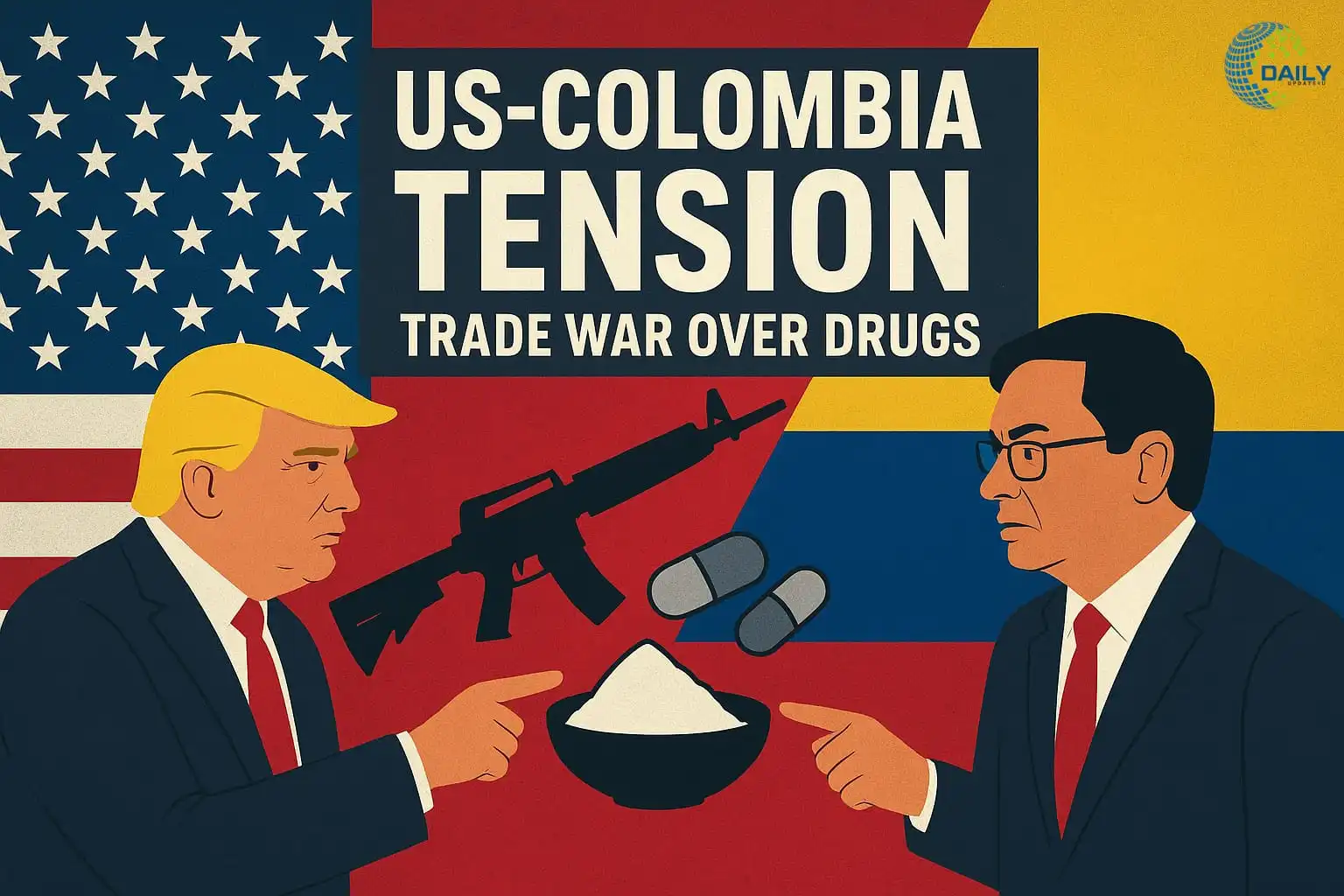
Cracks have now appeared in the decades-long strong relationship between the US and Colombia.
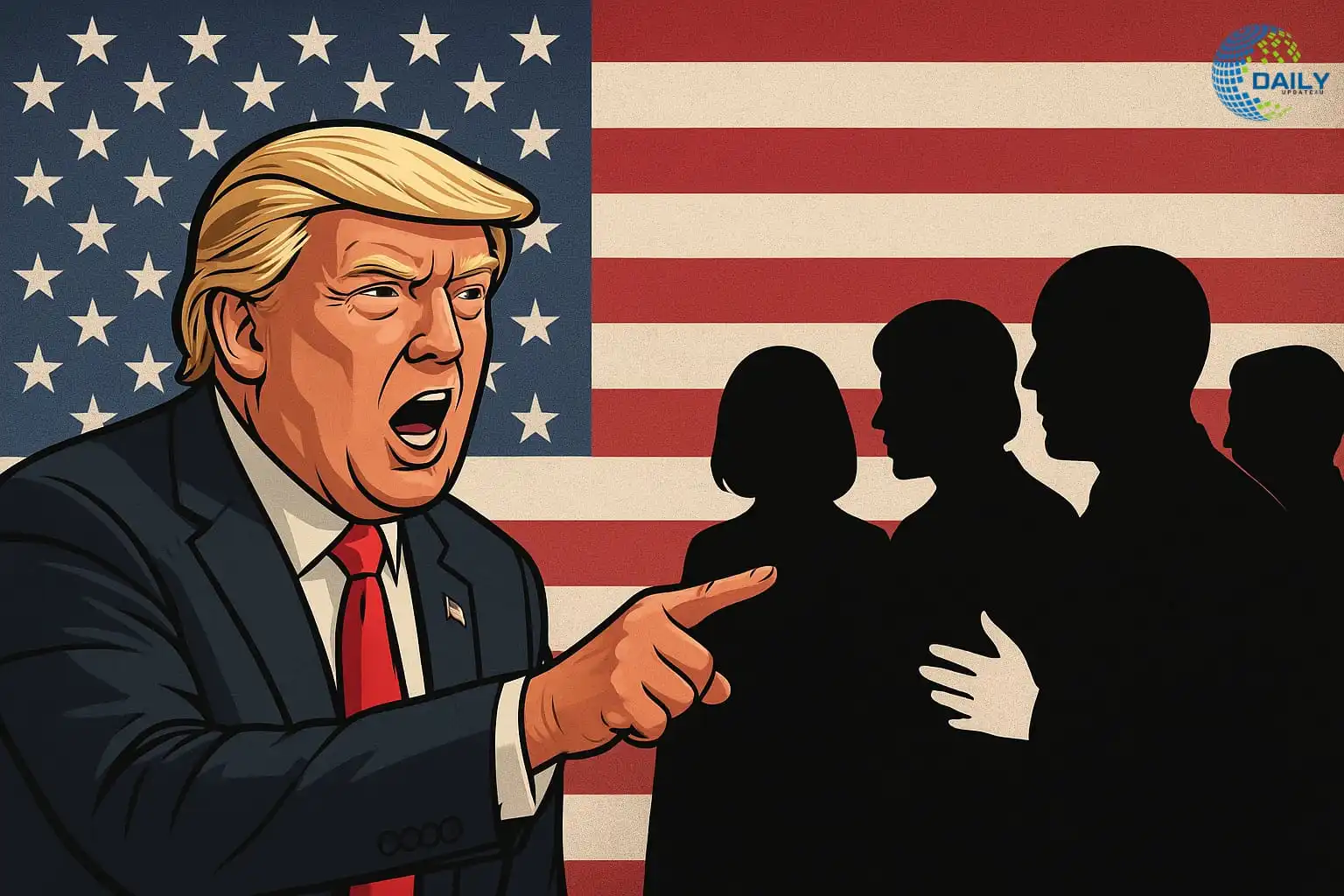
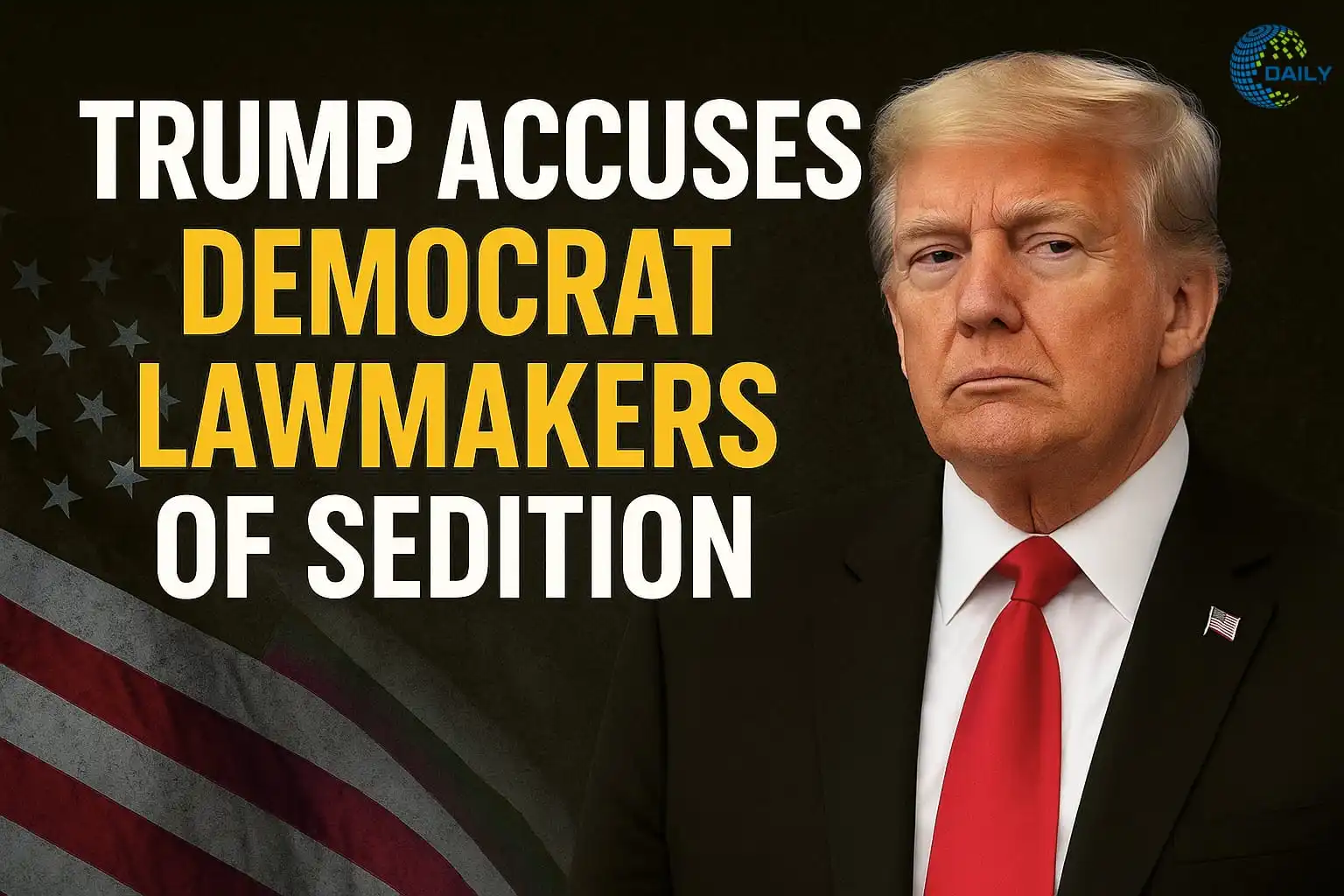
Recently, US President Donald Trump accused Colombian President Gustavo Petro of “facilitating drug trafficking” and announced the imposition of new import tariffs and the suspension of US aid to Colombia.
This statement not only signals tensions in economic relations between the two countries but could also impact the political direction of Latin America.
This incident has sparked a new debate in international politics—is the US now adopting a “tough economic policy” against its traditional allies?
➡️ Roots of US-Colombia Relations
The US and Colombia have had deep ties since the 1950s.
The main areas of cooperation between the two countries have been:
✅ Drug Control
The US has long collaborated with Colombia in its campaign against cocaine and other drug trafficking.
Under “Plan Colombia,” the United States provided billions of dollars in aid to Colombia to eliminate drug cartels there.
✅ Security and Military Cooperation
The United States provided training, weapons, and technical assistance to the Colombian military.
The two countries also cooperated in joint operations against terrorism and rebel groups.
✅ Trade Relations
The US-Colombia Free Trade Agreement came into effect in 2012.
This gave Colombia access to US markets and opened new investment opportunities for the US in South America.
But this partnership has now become strained due to economic pressure and political accusations.
➡️Start of the Recent Controversy
In October 2025, Trump issued a statement in which he said:
“Colombia has now become the largest center of drug production. The government there has failed to stop the drug mafia. We will no longer provide them with money, but will increase tariffs.”
Colombia immediately responded to this statement, calling it “insulting and false.”
Colombian President Gustavo Petro, who is considered left-wing, retorted:
“The US is blaming Colombia for hiding its failed anti-drug model. We need an equal partnership, not threats.”
This is where the war of words between the two countries began.
➡️ Drugs issue: Who is right, who is wrong?
The US alleges that cocaine production in Colombia has increased by 30% in the last two years.
Meanwhile, Colombia says it is promoting “legal agriculture” and encouraging farmers to grow alternative crops.
✅ Colombia’s position
The country has conducted numerous raids to eliminate drug cartels.
Farmers are being encouraged to grow crops like coffee and cocoa instead of coca.
Numerous drug factories and labs have been destroyed with US cooperation.
✅ US Position
Drug shipments are still reaching US markets.
Control at Colombia’s borders is weak.
Some government officials and local leaders are allegedly in cahoots with the mafia.
Thus, this dispute is not limited to accusations and counter-accusations, but also raises questions about the failure of international drug policy.
➡️ Meaning of Trump’s Tariff Threat
Trump’s “tariff hike” means that the US will impose additional taxes on products coming from Colombia.
This move could directly harm the Colombian economy.
⏺️Potentially Affected Sectors
✅ Coffee and flower exports – two of Colombia’s major export sectors.
✅ Minerals and petroleum products – a large portion of which are destined for the US market.
Agricultural commodities – such as avocados and bananas – could face reduced competitiveness due to increased tariffs.
Colombian economists say that if these tariffs are implemented, the jobs of approximately 200,000 people in their country could be affected.
➡️ Global Reaction
Reactions to the dispute have varied from around the world:
The European Union stated that dialogue and cooperation are the only solutions.
Latin American countries like Brazil and Argentina supported Colombia, stating that “the drug problem can be solved through partnership, not threats.”
The United Nations stated that global drug demand is the root cause and needs to be reduced.
➡️ Impact on Colombia’s Economy
Colombia is already facing several challenges: inflation, unemployment, and internal political instability.
✅Due to tariffs
Exports will decline
Pressure on foreign exchange reserves will increase
Foreign investors will become cautious
The unemployment rate could rise above 11%
Some analysts say this situation could force Colombia to turn to China or European countries.
➡️ Risks for the US
This move could prove to be a double-edged sword for the US.
✅ Diplomatic Losses – The US could be branded as a “threatening country” in Latin America.
✅ Economic Impact – Tariffs will lead to higher prices for American consumers.
✅ Drug Problem – Conflict will lead to reduced cooperation, which could further increase drug trafficking.
Some US senators have also criticized Trump’s policy, stating that “threatening instead of diplomacy is contrary to US long-standing policy.”
➡️ Media and Public Reaction
The US media is witnessing two distinct opinions on this controversy:
Conservative media: Trump’s statement is being described as tough and in the national interest.
Liberal media: It is being called a “diplomatic blunder” and an “economic suicide move.”
Meanwhile, anti-American sentiment is growing among the public in Colombia.
Hashtags like “#NoToUSBullying” are trending on social media.
➡️ Geopolitical Impact
This dispute will not be limited to the United States and Colombia.
China, Russia, and Iran are already trying to increase their economic and political influence in Latin America.
If Colombia distances itself from the United States, China could gain another strategic ally in South America.
Thus, this crisis could also impact the global balance of power.
➡️ Possible Solutions and Future Directions
Many experts believe that this tension can only be resolved through dialogue and cooperation.
The following steps have been suggested:
✅ Joint Investigation Commission – to impartially assess the situation of drug production and trade.
✅ Temporary moratorium on tariffs – until both countries find a negotiated solution.
✅ Alternative Development Plans – to launch new employment schemes in coca-producing areas.
✅ Increasing cultural and trade dialogue—to maintain trust between the people of both countries.
➡️ Conclusion
The US-Colombia conflict is not just a quarrel between two countries, but a sign of a changing global power dynamic.
Whereas the US once played the role of a “friend” in Latin America, it is now using the tool of “economic pressure.”
The future will depend on how quickly the two countries embrace dialogue—
Because confrontation can neither stop drugs nor advance development.
Dialogue and cooperation are the only lasting solutions.
➡️ Final Thoughts
It is time for the US to view its neighbors as “partners,” not “customers.”
And Colombia must also acknowledge its domestic challenges and take concrete steps toward reform.
If both countries work with mutual respect and transparency, this crisis can be turned into an opportunity.