 dailyupdate4u
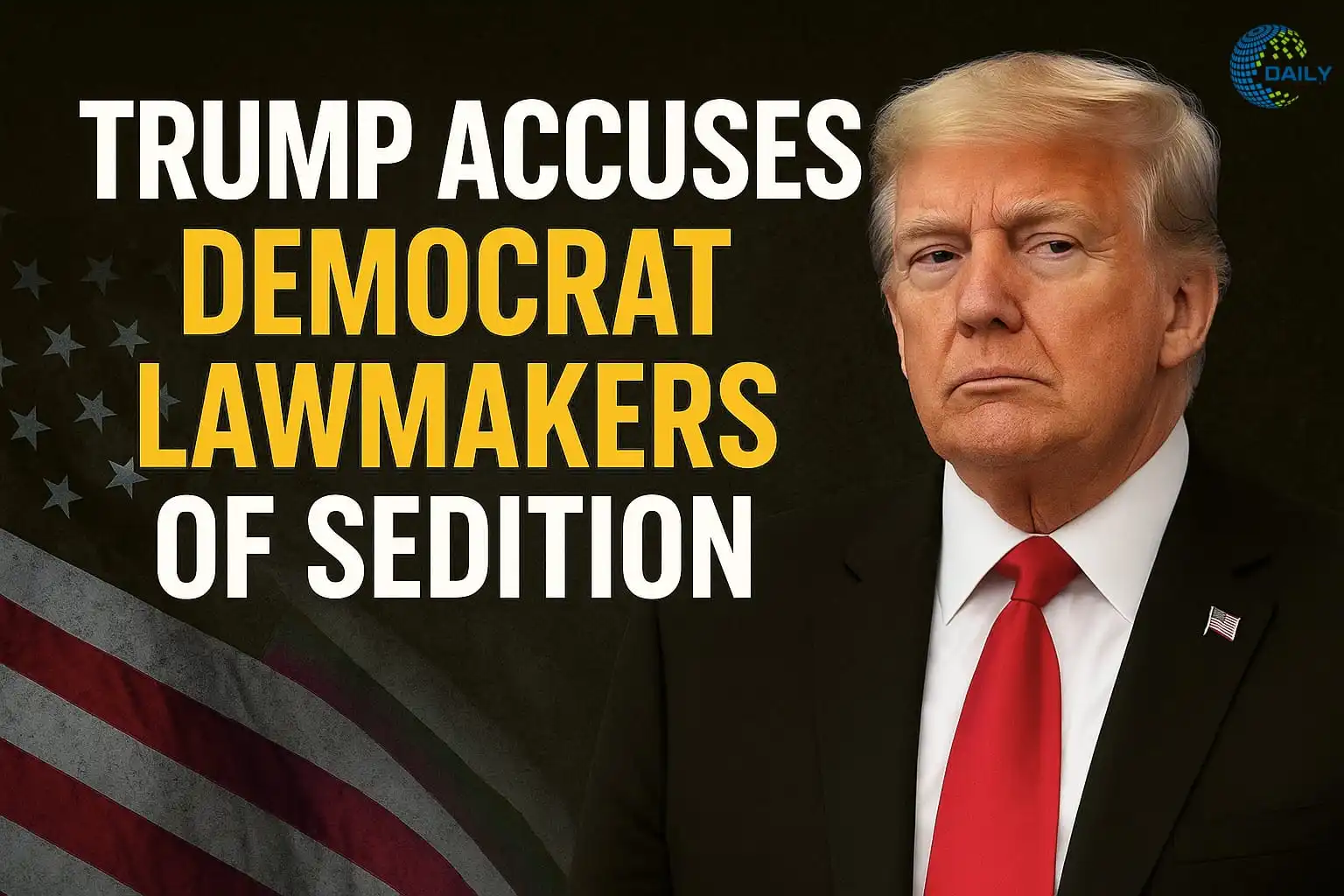
A major political and constitutional controversy is currently brewing in the United States. President Donald Trump’s order to deploy the National Guard in certain cities has sparked debate across the country. This move has not only sparked a conflict between the states and the federal government, but also raises questions about the very spirit of the US Constitution. A federal court has temporarily stayed the order, making the matter a crucial test in the US judicial system.
This controversy comes at a time when the country is already grappling with a government shutdown, economic uncertainty, and social tensions. This move by the Trump administration not only challenges the limits of the administrative structure but will also determine how the rights of the federal government and states will be defined in the years to come.
➡The Role of the National Guard—A Historically and Constitutionally Significant Institution
The National Guard is a specialized military unit of the United States that can operate under both the federal and state governments. It was established early in American history to help states maintain their security and respond to emergencies.
✅The National Guard originated from the tradition of militias composed of local citizens during the 17th-century colonial era.
✅The U.S. Constitution also grants states the right to maintain their own militias.
✅It was formally incorporated into both the federal and state structures through the Militia Act of 1903.
✅Constitutional Status
The National Guard’s dual role gives it a unique position in the U.S. federal system.
⏺State Control: Governors can activate the National Guard in response to natural disasters, riots, or other emergencies.
⏺Federal Control: The President can also activate it as federal forces when needed, such as in military operations overseas or in national emergencies.
➡ General Functions of the National Guard
✅ Relief operations during natural disasters such as hurricanes, earthquakes, or wildfires.
✅ Assistance in restoring law and order during large-scale civil unrest or riots.
✅ Participation in military training and foreign missions.
✅ Assistance in border security and counterterrorism operations.
➡ Balance between State and Federal Government
Generally, the deployment of the National Guard is coordinated between the governor and the president. However, if a president sends the Guard without state permission, it creates a constitutional dispute—and this is what has happened in the United States.
➡ How the Situation Evolved—The Origin of the Controversy
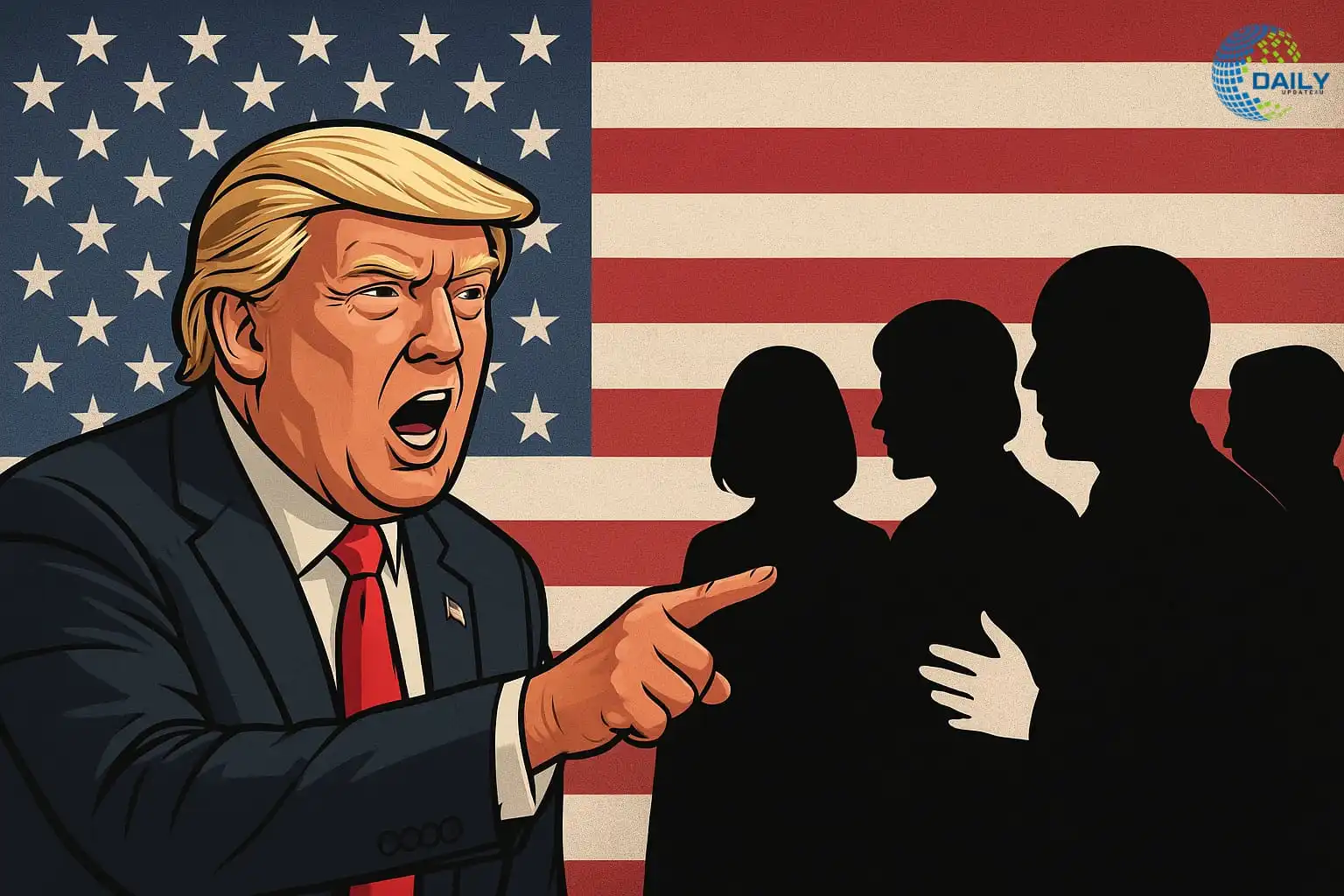
In recent months, protests have escalated in some major US cities over economic discontent, government shutdowns, and law and order. In many places, the protests turned violent. President Trump, citing this as a national security issue, decided to send the National Guard to certain areas without state permission.
But some governors appealed the move to court, calling it a “constitutional overreach,” and this sparked a major political and legal battle.
➡ President Trump’s Order—A Major Step in the Name of “National Security”
Amid a government shutdown and growing protests, President Donald Trump suddenly issued an order to deploy the National Guard in select US cities.
This order was to apply to areas ranging from Washington, D.C., to California and New York. Trump said in his statement:
“The country is descending into chaos. Local governments have failed to maintain law and order. The federal government must assume responsibility for national security.”
The Trump administration argued that when a state “fails to maintain law and order,” the president has the right to intervene under federal powers. They cited the Insurrection Act of 1807, which allows the president to deploy federal forces under special circumstances.
But this time the controversy erupted because this deployment was being done without the permission of the governors, which is considered a sensitive and unprecedented step in the American federal system.
➡ Constitutional Controversy — The Old Debate of “Union vs. States” Resurfaces
The US Constitution grants states considerable autonomy. State governments play a primary role, particularly in matters of law and order and policing.
The President’s dispatch of the National Guard without authorization challenged this constitutional framework.
➡ Separation of Powers in the Constitution
The 10th Amendment states that powers not expressly granted to the federal government are reserved for the states and the people.
Articles I and II allow the President limited intervention in national security and emergencies.
Trump’s order sparked debate among constitutional experts
Some argued that the Insurrection Act grants the President legitimate authority.
While most agreed that the circumstances this time did not constitute an “insurrection,” the President’s action was therefore beyond the Constitution.
➡ States’ Reaction — Allegations of “Constitutional Disregard”
Several states strongly opposed the President’s order.
Governors of states like California, New York, Illinois, Oregon, and Massachusetts have openly stated that they will not accept any federal forces in their territories without permission.
✅The Governor of New York stated,
“This is not federal intervention, but a political demonstration. The Constitution gives us the right to maintain security within our borders.”
✅Court Challenge
Within days, these states filed petitions in federal court, calling the Trump administration’s order a constitutional overreach.
They argued that the president is only permitted to take such action in the event of an “insurrection” or at the request of a state government.
Furthermore, they accused the deployment of military force of being “the use of military force for political gain.”
✅Public Reaction
The decision has created two strands among the public:
Some consider it a correct step for law and order.
While others deplore it as a “dictatorship-like move,” protests have erupted.
Massive rallies were held in many cities against “Federal Overreach.”
➡ A Sensitive Example
This isn’t the first time such a conflict has occurred between the federal and state governments.
During the Civil Rights Movement of the 1950s and 1960s, the president had repeatedly deployed National Guard or federal troops without state permission—but the issue then involved racial discrimination and violations of constitutional rights.
This time, despite the absence of any clear constitutional crisis, the president’s action became controversial.
➡ Court Decision—Presidential Order Stayed
The petitions filed by the states were heard expeditiously in federal court. The case involved constitutional rights and the scope of federal powers, placing it on a fast track. Within days, the court issued a major ruling, temporarily halting President Trump’s order.
✅The court stated in its decision:
“The President’s order neither rests on sufficient constitutional grounds nor demonstrates the existence of an insurrection or a situation that would justify intervention under the Insurrection Act.”
✅ Key Points of the Court
⏺ Deployment without the states’ permission violates the federal structure.
⏺ The President’s action appears to be motivated by political considerations, not a genuine security crisis.
⏺ The National Guard can only be deployed if the states themselves request it or if the situation constitutes an emergency as defined in the Constitution.
This decision not only dealt a blow to the President but also brought the debate over federal versus state rights to the forefront in America.
➡ Political Analysis — Hidden Signals in Electoral Politics
Experts believe that Trump’s move was not merely a security issue, but also a political strategy.
In view of the upcoming elections, the Trump administration wanted to project an image of strict law and order.
Some analysts said this move was an attempt to revive Trump’s old campaign slogan of “law and order.”
But the move backfired—many centrist voters saw it as an excessive use of power.
➡Federal versus State Rights — Old Debate Rekindled
This debate is nothing new in America.
The Civil War in the 1860s,
The Civil Rights Movement in the 1950s and 1960s,
And now in 2025, every time the federal government has encroached on state jurisdiction, a constitutional crisis has arisen.
The difference this time is that the situation wasn’t as urgent as in previous incidents.
➡ International Reaction—Global Media and Governments Watch
This conflict between the President and the States in the US also became a topic of discussion internationally.
Many newspapers in Europe and Asia described it as an example of “constitutional tension.”
Some countries cited it as an example of the balance of power in a democratic system, where the court sets limits on the executive.
Media in some authoritarian countries presented it as “American political chaos.”
In India, too, the controversy was closely watched in political and academic circles. Many experts said that the strength of the US federal system lies in the judiciary actively maintaining balance.
➡ US Media Reporting—A Bifurcated Story
The US media extensively covered the issue, but the reporting revealed a sharp ideological divide:
Conservative media characterized President Trump’s action as “necessary to restore law and order.”
Liberal media strongly criticized it, calling it a “step toward dictatorship.”
Independent journalists and analysts hailed the court’s decision as a victory for the US Constitution.
The issue also trended on social media—hashtags like #FederalOverreach, #StatesRights, and #TrumpVsConstitution were used in millions of posts.
➡ Conclusion
The deployment of the National Guard and the resulting constitutional dispute proved to be a major political and constitutional turning point for the United States.
This entire incident made it clear that:
In a democracy, no single center of power can have unlimited powers.
The balance between the president, the state, and the judiciary is the backbone of the American system of governance.
The court’s decision not only brought the current controversy to a halt but also sent a clear message about constitutional limits for the future.
This controversy is poised to be a major political issue in the upcoming elections. Trump supporters will tout it as a symbol of strong leadership, while opponents will portray it as an attempt to overstep the bounds of the Constitution.