 dailyupdate4u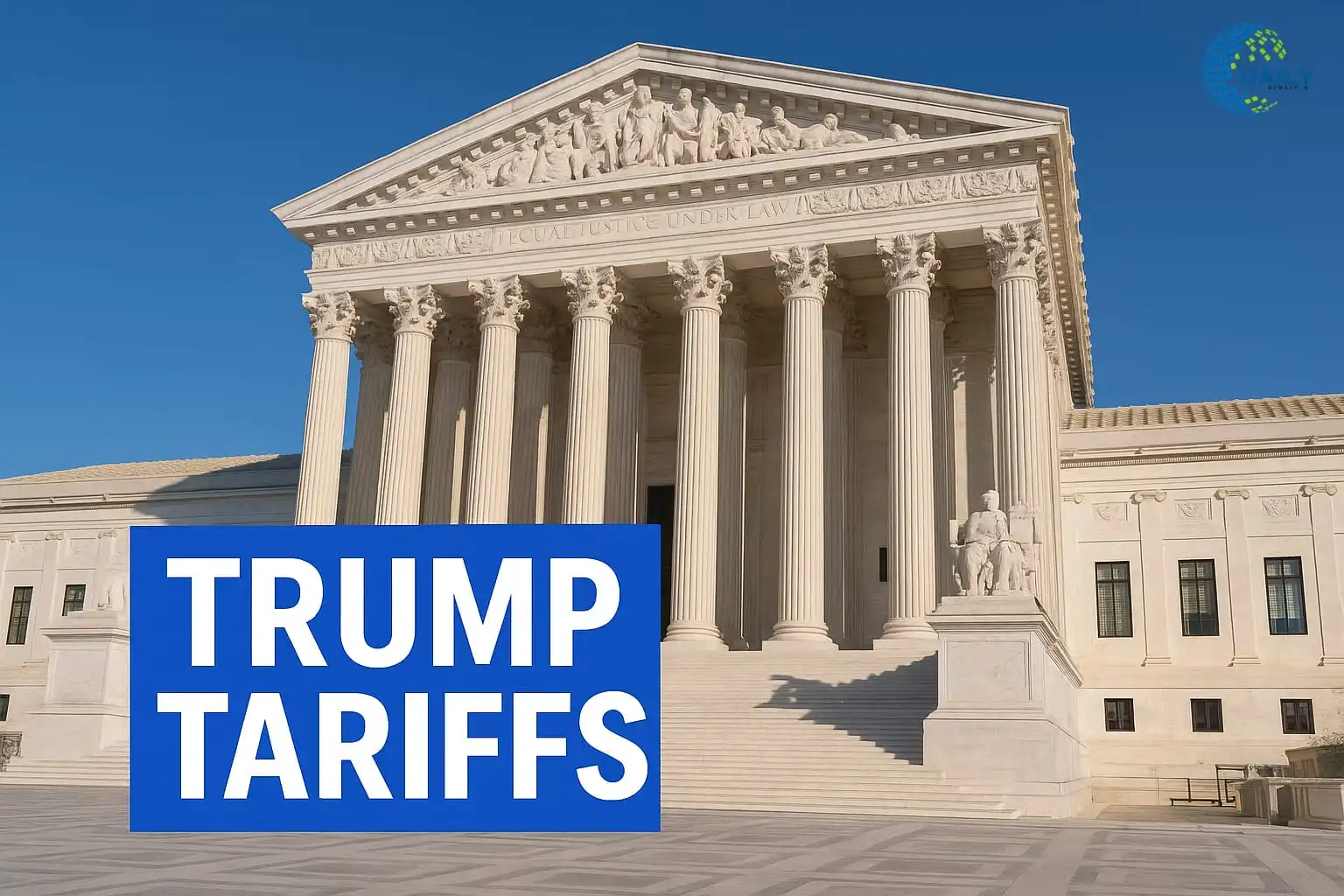
A historic battle is unfolding today between American politics and the economy.
The hearing on Donald Trump’s global tariff policy has begun in the US Supreme Court.
This is not just a legal matter, but a case that will determine America’s trade freedom, the constitutional separation of powers, and the direction of the global economy.
➡️ What was Trump’s tariff policy?
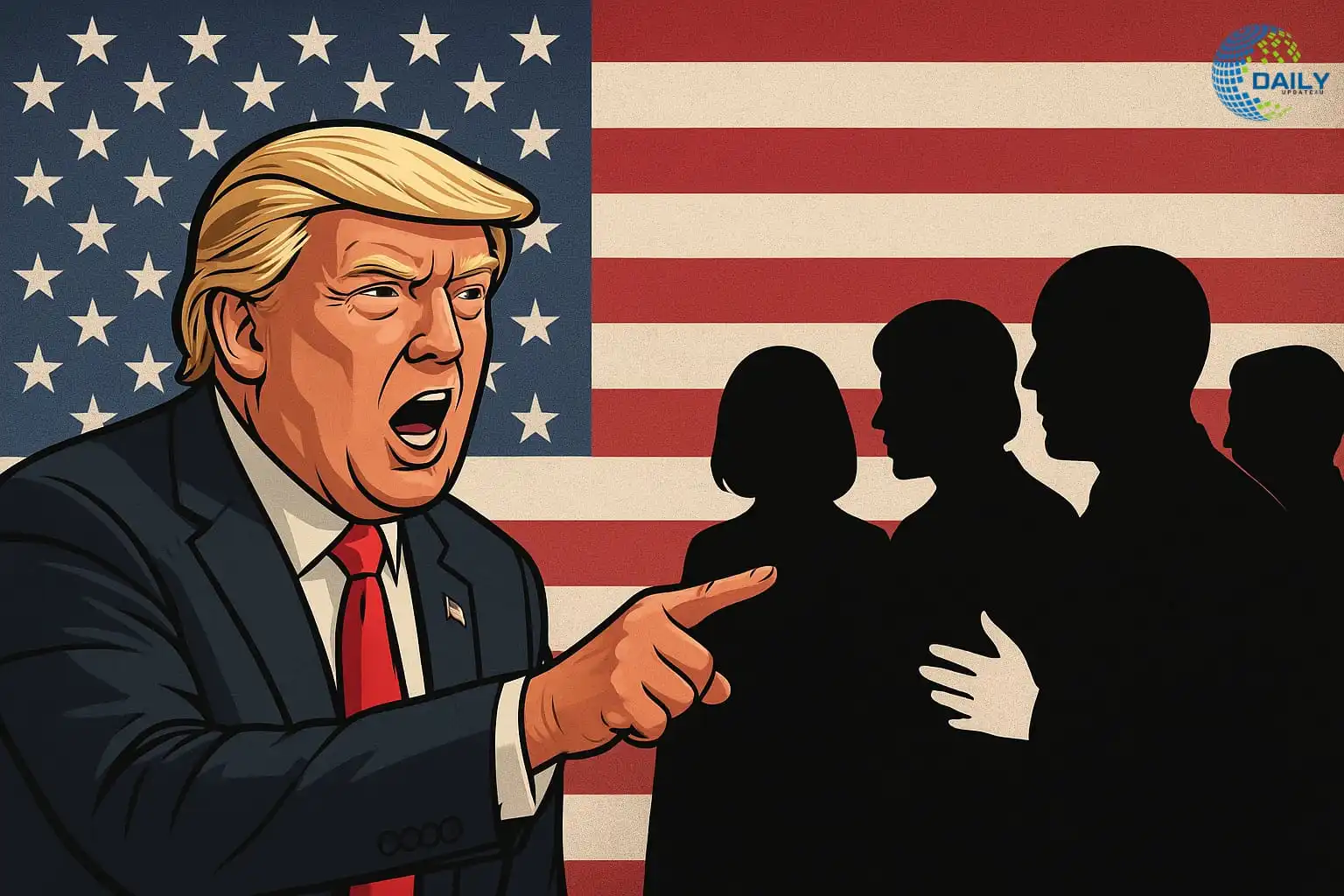
When Donald Trump became President of the United States in 2017, his slogan was
America First.
Under this policy, he imposed heavy import tariffs on foreign products.
The Trump administration increased taxes at various levels, particularly on goods coming from China, the European Union, Canada, India, and Mexico.
Up to 25% tax on steel
A 10% tax on aluminum
And tariffs ranging from 15% to 40% on many Chinese electronics, solar equipment, and vehicles.
Trump claimed this would protect American industry and deter economies like China from unfair trade practices.
➡️ Why did this case reach the Supreme Court?
This case reached the Supreme Court because several American companies and industry organizations argued that
“The President should not have the sole authority to make such a major economic policy.”
They argue that Trump imposed tariffs arbitrarily, using the International Emergency Economic Powers Act, even though this law was designed to address national security emergencies, not to determine trade policy.
Therefore, this case has now become a question of the balance of power between the executive and the legislature.
➡️ Trump Administration’s Position
Trump’s lawyers have argued in court that
✅ The President has the constitutional authority to protect both national security and economic security.
✅ Inequalities in foreign trade can also be considered an “economic emergency.”
✅ Several previous presidents have also imposed economic sanctions under the IEEPA.
They argue that protecting American jobs is a matter of national security, and therefore, this action is legal and justified.
➡️ Opposition and industry groups’ Arguments
On the other hand, American companies and trade associations are saying that
Trump implemented this policy without Congress’s approval.
This move increased costs for industries, leading to inflation in the domestic market.
Farmers, the automobile industry, and the electronics sector suffered huge losses.
China also imposed retaliatory tariffs, hurting American exports.
The opposition argues that allowing the president to impose tariffs without restraint would undermine the “Checks and Balances” principle of the US Constitution.
➡️Supreme Court’s Initial Comments
During the hearings, several Supreme Court justices indicated they were questioning the constitutional limits of Trump’s policy.
✅Chief Justice John Roberts asked:
“Can every economic imbalance be called an ’emergency’?”
Justice Amy Coney Barrett remarked:
“If this authority is so broad, what role does Congress play?”
Meanwhile, Justice Samuel Alito said that the head of state must have some flexibility, as global circumstances change rapidly.
The Court is moving towards a balanced decision on this issue.
➡️ International Reaction
Countries like China, the European Union, and India have also paid close attention to the news of a hearing on Trump’s tariff policy.
Because if the US Supreme Court curbs the president’s tariff powers, it will have a profound impact on global trade policies.
China wants the new US government to reduce tariffs so that trade can return to normal.
The European Union has also described Trump’s tariff policies as “unilateral.”
India has also stated that tariffs harm the competitiveness of developing countries.
➡️ Impact on the US Economy
Trump’s tariff policy brought some benefits to the US, but the disadvantages were also significant.
✅Advantages
Increased revenues for some domestic steel and aluminum companies.
The government received additional tax revenue.
✅Disadvantages
Prices of consumer goods increased.
China imposed retaliatory taxes, which dealt a blow to US exporters.
American farmers had to pay billions of dollars in subsidies to compensate for the losses.
➡️ Impact on American Politics
This matter has now become a major issue in American politics.
The Democratic Party is claiming that Trump abused his presidential powers.
Republican leaders are calling it a symbol of “strong leadership.”
This issue could come up again in the 2026 elections
because it directly impacts American jobs, industries, and foreign policy.
➡️ What could be the decision?
If the Supreme Court determines that Trump exceeded the Constitution’s limits, then:
Future presidents will not be able to impose tariffs without Congress’s approval.
The power over trade policy could return to Congress.
But if the Court rules in Trump’s favor, then:
The President’s international economic powers will continue to increase.
Future presidents will also be able to exercise this power.
➡️ Expert Opinion
American economist Paul Krugman says:
“Tariffs may provide temporary political gains, but in the long run, they harm both competition and consumers.”
While Trump supporter Larry Kudlow argues:
“America needs tariffs to protect its factories and jobs.”
Arguments from both sides indicate that this issue is not just about law, but also about ideology.
➡️ Reactions from the General American Public
Opinions on this issue are divided among ordinary Americans.
Some say that the “Made in USA” policy has increased domestic production.
Others say that “everything has become more expensive, increasing the burden on the common man.”
Therefore, for the public, this issue is directly linked to the standard of living and the cost of living.
➡️ The Way Forward
Regardless of the Supreme Court’s decision, this case will serve as a lesson for America—
how the balance of power and the interpretation of law can impact the economy in any democratic country.
If the Court restricts the president’s powers, it will be a constitutional victory for democratic institutions.
And if not, the world will see how one person’s economic thinking can transform global trade.
➡️Conclusion
The Supreme Court hearing on Donald Trump’s tariff policy is not just a legal process
It is a test of America’s democracy, economy, and international image.
This case will determine whether the “America First” policy is constitutional.
And the biggest question is whether America will continue to champion open trade in the years to come,
Or will it further raise the walls of protectionism within its borders?