 dailyupdate4u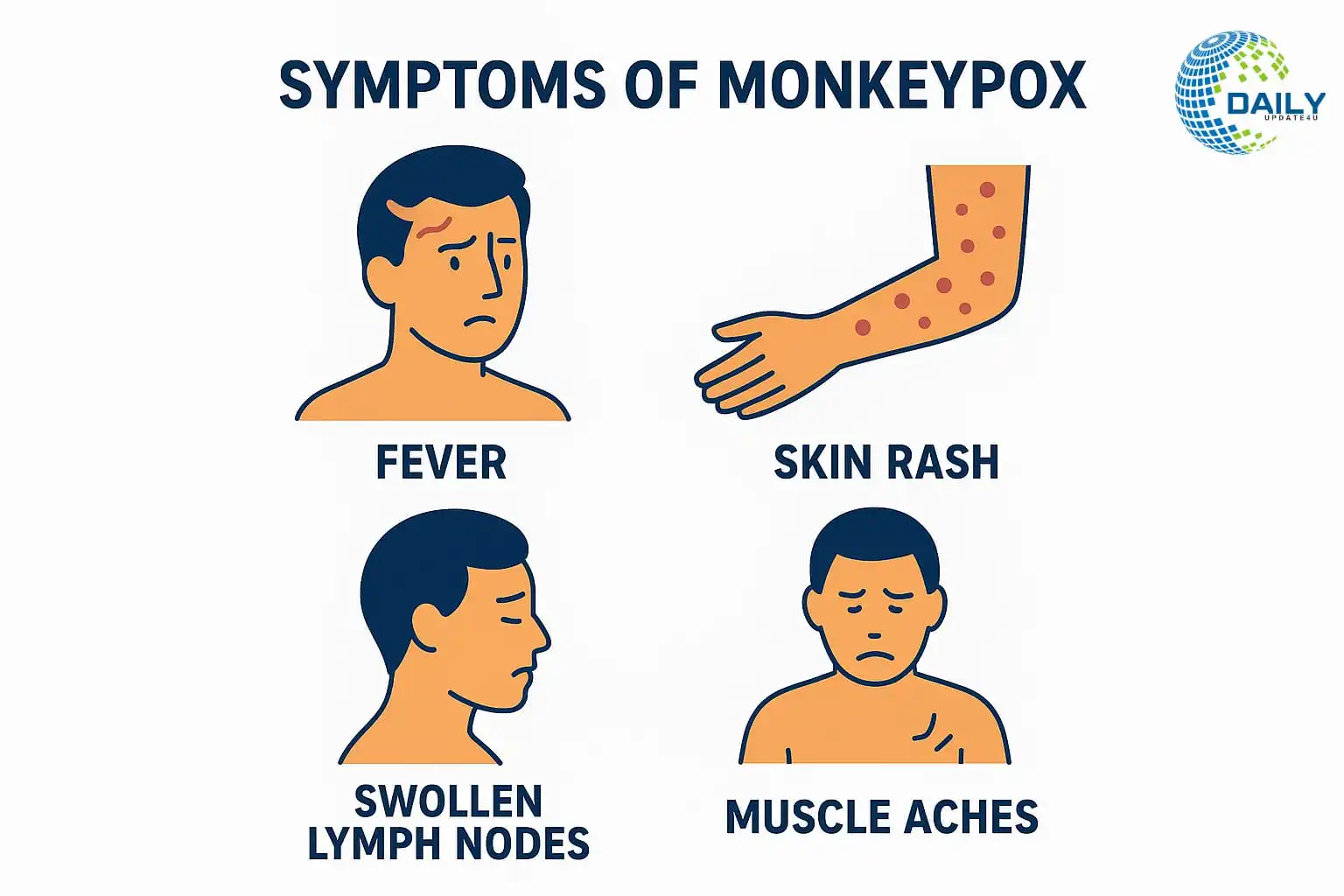
The world hadn’t yet fully recovered from the wounds of COVID-19 when another infectious disease began to resurface—monkeypox. Over the past few months, a few cases of the “Clade I” strain of monkeypox have been reported in the United States, with many patients having no history of foreign travel. This means the virus is now beginning to spread locally.
This situation is being seen as a worrying sign by health experts and policymakers.
➡️ What is Monkeypox?
Monkeypox is a viral infection caused by the Orthopoxvirus, which belongs to the same family as the smallpox virus.
Although monkeypox is not as severe as smallpox, its symptoms and transmission patterns are somewhat similar.
✅Main Symptoms
Fever, headache, and fatigue
Rash or blisters on the body
Swelling of the lymph nodes
Muscle and body aches
The infection is usually spread through skin-to-skin contact, bodily fluids of an infected person, or contaminated objects.
➡️ History and Origin
The first case of monkeypox was discovered in 1958 in laboratory-reared monkeys, giving it the name “monkeypox.”
The first case in humans was reported in 1970 in Congo, Africa.
For many years, the disease remained confined to Central and West African regions, but its global spread increased rapidly in 2022.
➡️ Current Situation in the United States (Analysis to 2025)
Thousands of cases of monkeypox were reported in the United States in 2022, but this number has decreased following vaccination and public awareness.
Now, in late 2025, some “Clade I” cases have been confirmed again.
According to the latest report from the Centers for Disease Control and Prevention:
Three patients were found in Southern California with no known foreign travel history.
This indicates that the infection has now entered the stage of local transmission.
In total, approximately six cases of this variant of the virus have been reported in the United States so far.
➡️ Why is the Clade I variant dangerous?
There are two major types of monkeypox:
✅ Clade I (Central African type)
✅ Clade II (West African type)
Clade I virus is considered more deadly and spreads rapidly.
Its mortality rate is several times higher than that of Clade II.
According to previous data from Africa, its mortality rate can be up to 10%.
This virus can persist in the body for a long time and is more dangerous for people with weakened immune systems.
➡️ How is the infection spread?
✅ Through contact with skin lesions or blisters from an infected person.
✅ Through items used by an infected person, such as clothing, bedding, or towels.
✅ Through respiratory droplets.
✅ It can also spread from animals to humans – especially monkeys, rats, or squirrels.
➡️ Response of Health Agencies in the US
The US CDC, FDA, and local health departments are continuously monitoring the situation.
The CDC has taken the following steps:
Testing networks have been strengthened in infected areas.
Vaccination campaigns are being reactivated.
Healthcare workers have been issued warning notices to recognize symptoms early.
Quarantine protocols have also been updated.
➡️ International Impact
The spread of monkeypox is not limited to the US.
Variants of the virus have also been detected in Canada, Britain, Spain, and France.
The WHO has warned that if the virus mutates again, it could trigger a repeat of the “Public Health Emergency.”
➡️ Growing Public Concern
There is a mild but growing concern among the American public about this infection.
Hashtags like “#MonkeypoxAlert” and “#HealthSafety” are trending on social media.
Health experts believe this fear is natural, but caution should be exercised instead of panicking.
➡️ Precautions and Prevention Measures
The following precautions should be taken to prevent monkeypox:
✅ Maintain distance from an infected person.
✅ Wash hands frequently and use hand sanitizer.
✅ Avoid unnecessary contact with wild animals.
✅ Consult a doctor immediately if you experience any health symptoms.
✅ Wear a mask and gloves in crowded places.
✅ If traveling, read CDC or WHO travel guidelines.
➡️ Lessons for India and Other Countries
India has reported only a few cases of monkeypox so far, but given the situation in the United States, we should remain vigilant.
The government should
Strengthen airport screening and testing.
Prepare the public health system.
Intensify vaccination and awareness campaigns.
➡️ Vaccine and Treatment
Two vaccines, JYNNEOS and ACAM2000, have been approved in the United States.
JYNNEOS is given in two doses and is considered safer.
ACAM2000 is based on the older smallpox vaccine and may cause some side effects.
✅Treatment
There is no specific medication for monkeypox, but
An antiviral drug called Tecovirimat has been approved for emergency use.
Patients are generally treated based on symptoms—such as fever, pain, and blisters.
➡️ The Role of Media and Mass Communication
Since COVID, the world has seen how important transparency and prompt dissemination of information are.
If governments and media work together to share accurate and factual information, panic can be prevented.
In the United States, local media have prominently published CDC guidelines, ensuring people receive accurate information.
➡️ Social and Psychological Impact
Every new disease brings a psychological impact
increased fear, anxiety, and social isolation.
People who are already experiencing mental stress or depression are particularly vulnerable.
Health experts advise:
Stay away from rumors spreading on social media.
Seek information only from authentic sources (such as the CDC, WHO).
Take care of your mental health.
➡️ The Future—Could this become a new pandemic crisis?
It’s still too early to say whether monkeypox will become a global pandemic again.
But experts say the virus’s ability to mutate and local transmission indicate that humanity must be prepared.
Future health policies must now be based on a “One Health Approach”—that is, the simultaneous protection of humans, animals, and the environment.
➡️ Conclusion
While the new Clade I monkeypox infection in the United States is currently limited, its signs are alarming.
This reminds us that, regardless of the form of infection, caution is the key to protection.
This threat can only be overcome through a partnership between governments, doctors, and the public.
Awareness, hygiene, and a scientific approach are the strongest weapons in this fight.