 dailyupdate4u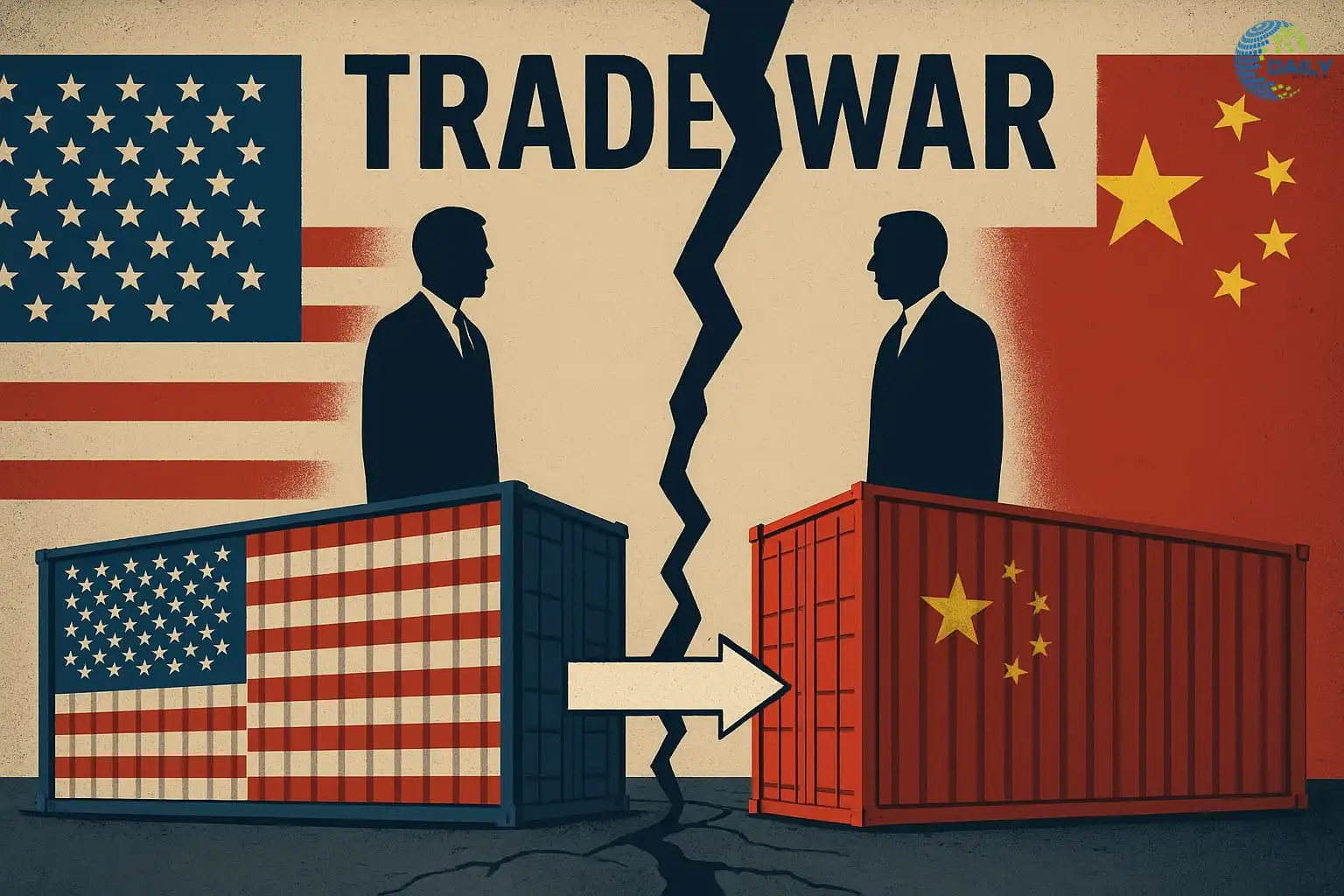
The global economy of the 21st century has revolved around two superpowers, the United States and China.
On one side is the United States, with its technological innovation, dollar strength, and global political influence; on the other, China, with its rapidly emerging manufacturing power, low production costs, and a vast consumer market.
Trade relations between the two countries have always been complex, but in recent years, this complexity has begun to transform into an economic conflict.
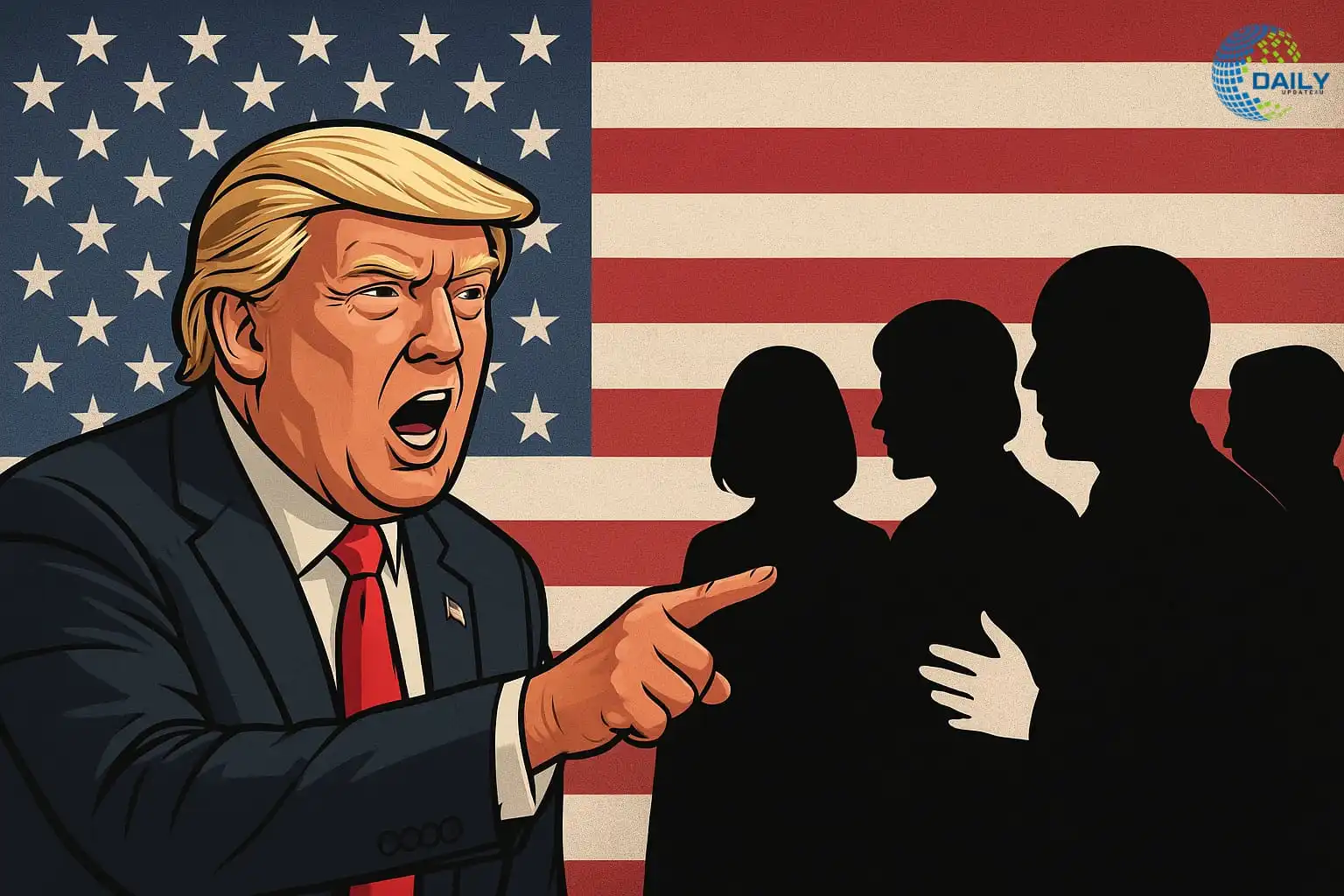
US President Donald Trump’s threat to impose 100% tariffs on Chinese imports in October 2025 has created a stir in global markets. This move will not only impact the economies of both countries but could also disrupt the global trade structure.
➡️ Background to the Trade War
China-US trade tensions are not a new story.
The trade war, which began in 2018, made global headlines when the United States imposed heavy tariffs on Chinese steel, aluminum, and electronic goods.
In response, China imposed retaliatory tariffs on American agricultural products, automobiles, and technology.
There were several key factors at the root of this conflict:
✅ Trade deficit – The US felt that China engaged in unequal trade with it.
✅ Intellectual property theft – Allegations of copying the designs and technology of American companies.
✅ Technology transfer pressure – Pressure on American companies operating in China to share local technology.
✅ Political influence – The US wanted China to practice “fair competition” in global trade.
➡️ Trump’s new policy and threat of 100% tariffs
President Trump has once again adopted a strategy to increase economic pressure on China.
He announced that an additional 100% import duty could be imposed on electronics, industrial equipment, and even toys coming from China.
✅This decision has three key objectives:
Promoting domestic manufacturing
Reducing technological dependence on China
Protecting American jobs
However, experts believe this move could prove detrimental to both countries, as global supply chains are deeply interconnected.
➡️ China’s Possible Response
China has condemned this announcement, stating that “the US is embarking on a path of protectionism.”
The Beijing government could potentially take the following steps:
✅Retaliatory tariffs on US goods
✅Delaying licensing for US companies
✅Weakening the yuan against the dollar to ensure exports remain competitive
✅Forming new trade partnerships—especially with Europe, Russia, and Africa
➡️ Impact on Global Markets
If this trade tension escalates further, it will impact the global economy.
Crude oil prices could become volatile.
Gold and the dollar will become safe havens for investors.
Stock markets may decline.
Industries may suffer losses due to supply chain disruptions.
This presents a mixed opportunity for countries like India – on the one hand, investments moving away from China may come to India, while on the other, US pressure may also increase.
➡️ Technology and Semiconductor Battle
Today’s economic competition is not limited to trade but has also become a battle for technological dominance.
The United States has imposed export restrictions on Chinese companies such as Huawei, ZTE, and SMIC.
The aim is:
✅ To keep China away from advanced semiconductor manufacturing technology.
✅ To give American companies such as Intel and Nvidia a competitive advantage.
China is now investing billions of dollars in developing its own chip manufacturing capacity.
This sector could become the center of the biggest economic battle of the coming decade.
➡️ Internal Pressures in the United States
There are also differences within the United States regarding the trade war.
Many industrialists say that tariffs on China will increase their production costs.
Farmers’ associations say that China is the largest buyer of their agricultural products.
Consumer organizations are warning that this will increase the prices of everyday goods.
Despite this, the Trump administration remains committed to an “America First” policy.
➡️ Impact on China’s Economy
China’s economy is already experiencing slow growth.
Increasing US tariffs
could reduce exports
impact the manufacturing sector
could increase the unemployment rate
could reduce foreign investor confidence
However, China’s vast domestic market and government support programs could offset this pressure to some extent.
➡️ Restructuring of the Global Supply Chain
Due to the US-China dispute, many multinational companies are shifting their manufacturing bases to India, Vietnam, Mexico, and Indonesia.
This process is called the “China+1 Strategy.”
This presents a major opportunity for countries like India to attract investment through new investment policies and infrastructure improvements.
➡️Prospects for India
India can take advantage of this situation:
Foreign investment in the electronics manufacturing sector may increase.
India is moving towards self-reliance under the Semiconductor Mission and the PLI scheme.
The US and Europe are looking to diversify their supply sources – India can become a reliable partner in this.
But to do this, India will have to work on three things:
✅ Infrastructure improvement
✅ Policy stability
✅ Skilled human resource development
➡️ Expert opinion
Economists describe this conflict as a “zero-sum” game, where victory is determined by defeat.
The World Bank, IMF, and WTO have already warned that if trade tensions escalate further, global GDP could decline by 1-1.5%.
➡️ Conclusion
The trade conflict between the US and China is not only an economic one, but also a symbol of strategic and political power balance.
The policies of both countries will shape the course of the entire world in the coming years.
While the US seeks to protect its domestic jobs and technological supremacy, China aims to further strengthen its position in the global market.
Amidst this conflict, economies like India, Southeast Asia, and Europe may discover new possibilities for themselves.