 dailyupdate4u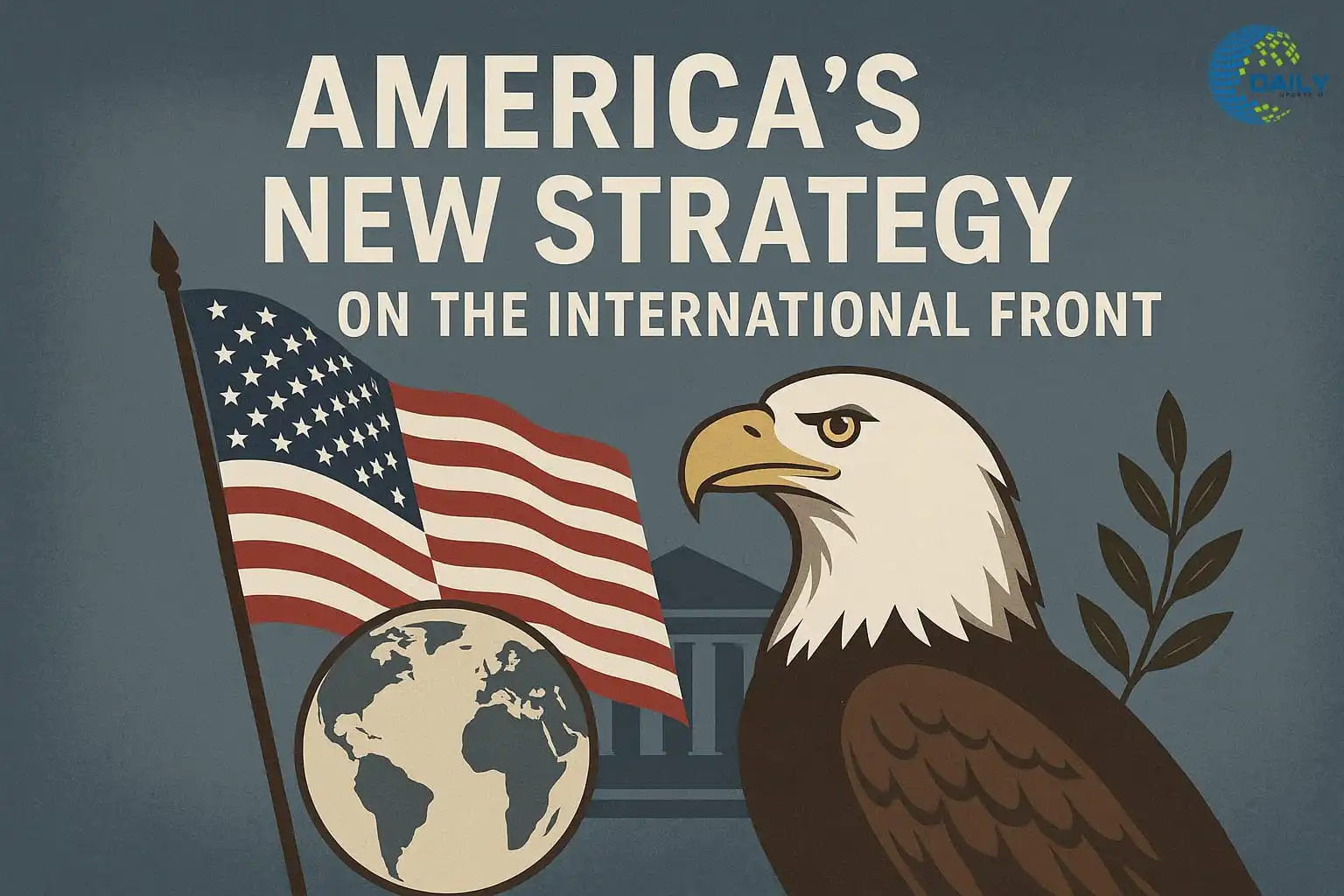
The United States has always been a major player on the international political stage.
From the post-World Wars to the beginning of the 21st century, the United States established itself as a “global leader.”
But in recent years, the world order has undergone rapid changes.
Countries like Russia, China, Iran, and North Korea are challenging America’s hegemonic policies.
In this context, America’s foreign policy in 2025 appears to be entering a new era.
Whether it is in the Middle East, the Asia-Pacific region, or Europe,
America now appears to be adopting a policy of “balance” rather than “confrontation.”
This blog will provide an in-depth analysis of this new American strategy.
It will explain in which areas, for what reasons, and in what direction the United States is reshaping its policies.
➡️ Background of the Changing Global Landscape
✅ The Rise of a Multipolar World
Earlier, the world order was bipolar: the United States versus the Soviet Union.
But today’s world has become multipolar.
Now, many countries, such as:
China (economic and technological power)
India (democratic and regional balancing power)
Russia (energy and military influence)
European Union (collective policymaking)
have a strong influence in their respective regions.
In this changed situation, the United States is finding it difficult to play the role of a “superpower” alone.
Therefore, it is now moving towards alliance- and partnership-based diplomacy.
➡️ New Initiatives in the Middle East
✅ Closeness between Syria and the United States
A major change in 2025 was that US President Donald Trump invited Syrian President Ahmed al-Sharaa to the White House.
This event was historic, as relations between the US and Syria had virtually broken down since 2011.
Now the two countries are discussing shared security interests.
✅Main Objectives
Reducing Iran’s influence
Joint operations against the Islamic State
Investment and reconstruction of the Syrian economy
✅Results
Opportunity for the US to once again become a “decisive player” in the Middle East
Pressure on the strategic positions of Russia and Iran
➡️ Balance between Israel and Arab countries
The US no longer wants to remain solely a supporter of Israel.
Its goal is to maintain a balance between Israel and the Arab countries.
It is now establishing new security treaties with countries such as Saudi Arabia, the UAE, Qatar, Oman, and Egypt.
This will provide two major benefits to the US:
✅ Control over energy supplies
✅ Countering the influence of Iran and Russia
➡️ Energy and trade corridors
Instead of reducing its dependence on oil, the US now seeks to become an energy investor and technology partner in the Middle East.
For example,
The US has announced a Green Energy Transition Fund.
It is partnering with Saudi Arabia and the UAE on solar energy and hydrogen projects.
This is likely to give the US “new energy leadership.”
➡️ Asia-Pacific Strategy
✅ Balancing China’s Indo-Pacific Strategy
The focus of America’s Indo-Pacific strategy is countering China.
But now this confrontation is not military, but on the technological and economic front.
✅ Key Points
Strengthening the “Quad Group” (India, Japan, Australia, and the United States)
Emphasis on “freedom of navigation” in the South China Sea
New projects as an alternative to China’s “Belt and Road Initiative”
➡️ Growing Partnership with India
India and the United States are now expanding cooperation across security, technology, energy, and space.
The United States recognizes that India is a democratic balancing force in the region.
That’s why the two countries are:
Semiconductor Production
Defense Exports
5G and Cybersecurity
A rapidly growing partnership is taking shape in areas such as security, technology, energy, and space.
➡️ Europe and NATO’s Direction
✅ Rebalancing with European Countries
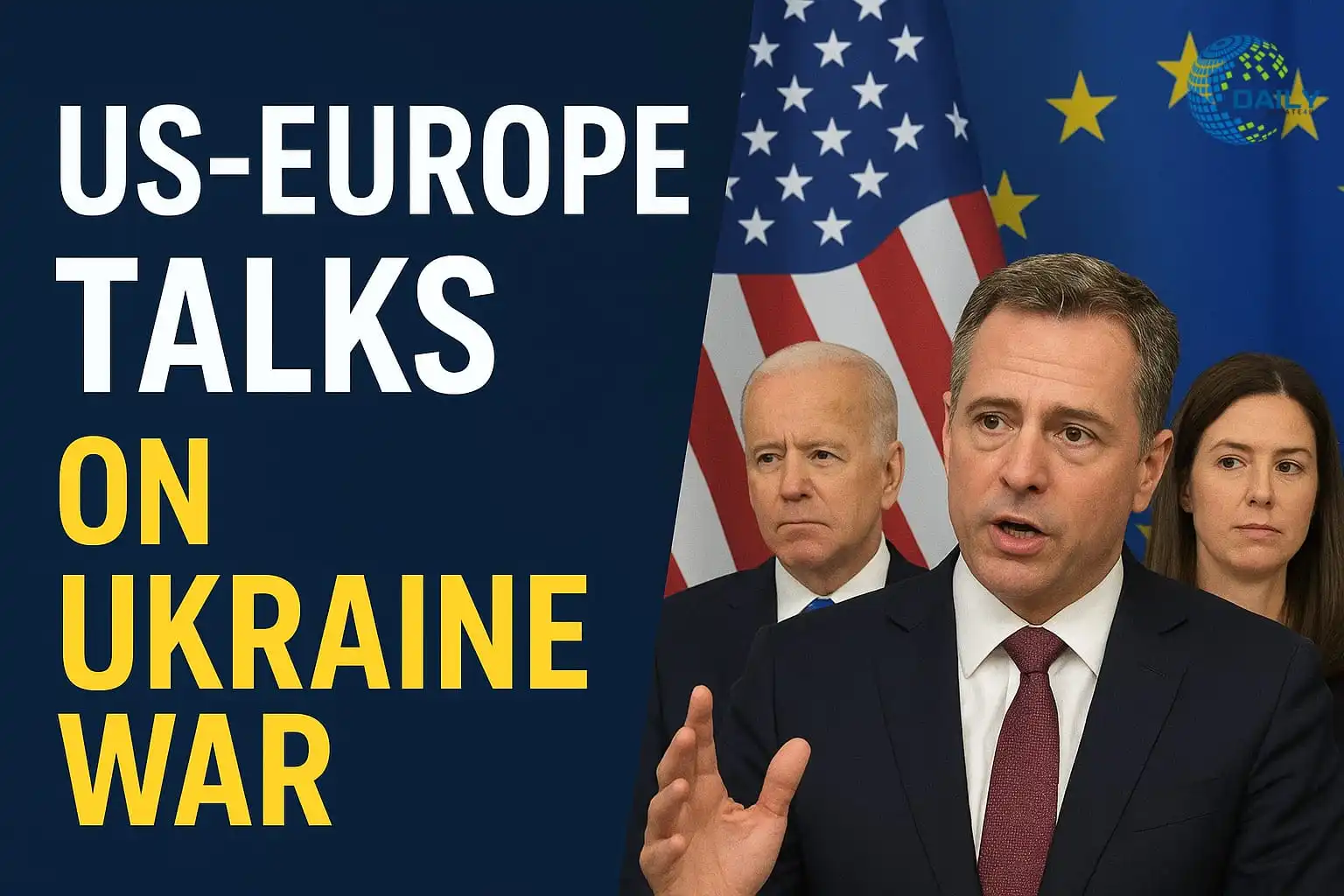
Europe’s security system weakened after the Russia-Ukraine war.
The US has redefined its role within NATO.
Now the US wants
Europe to become more self-reliant
but to maintain America’s role in security leadership.
This strategy aims to achieve “greater influence with less expenditure.”
➡️ Technological and Economic Front
✅ A New Battle for Technological Supremacy
The US now wants to assert its power internationally, not through military might but through technological dominance.
Its goals are
Artificial Intelligence
Quantum Computing
Biotechnology
Sustainable Energy
By remaining a leader in these areas, the US wants to maintain its dominance in the global economy.
➡️ The Dollar’s Position and Economic Diplomacy
Another major US goal is to maintain the dollar’s global position.
Amidst efforts by China, Russia, and BRICS countries to create alternative currencies, the United States has moved towards a “digital dollar.”
This will provide two benefits:
✅ Global financial control will be maintained.
✅ Sanctions policy will be made more effective.
➡️ Human Rights and Democracy Policy
The United States is now adopting a “selective” approach to human rights and democracy issues.
Previously, it tried to promote democracy in every country,
But now it is active only in countries where its strategic interests are involved.
For example,
Gaining access to mineral resources in Africa under the guise of “supporting democracy.”
Gaining control of the technology market by promoting “digital democracy” in Asia.
➡️ Key Features of the New Foreign Policy
Strategic Areas: New US Policy Objectives
Middle East: Dialogue and Reconstruction
Reducing Iran-Russia Influence
Asia: Partnership-Based Strategy
Balancing China
Europe: Limited Leadership, Smart Diplomacy, Low-Cost Influence
Technological Front: AI, Investment in Defense Technology, Global Economic Dominance
Human Rights Policy: Selective Intervention, Strategic Containment
➡️ Challenges and Criticisms
This new US strategy is also facing criticism.
Some experts say this policy is “pragmatic but opportunistic.”
Many countries feel that the US has now become a promoter of “self-interest” rather than “democracy.”
China and Russia have described it as a “double-faced policy.”
Nevertheless, America’s “smart diplomacy” is being considered successful on many fronts.
Directions for the coming years
Future US foreign policy will be based on three pillars:
✅ Partnership-based leadership
✅ Technology and economic dominance
✅ Use of smart power
If this policy succeeds, the US could once again become the center of global strategic balance in the coming decades.
➡️Conclusion
“America’s New Strategy on the International Front” is proof that
World politics will no longer be determined solely by war or military power,
but by economic, technological, and diplomatic balance.
America has realized that
In this complex world of resources and ideologies,
“Smart power”—that is, a combination of intelligence, economic, and strategic cooperation—is more effective than “hard power.”
In the coming years, this policy
will redefine America’s role across the globe, perhaps even ushering in a new global chapter.