 dailyupdate4u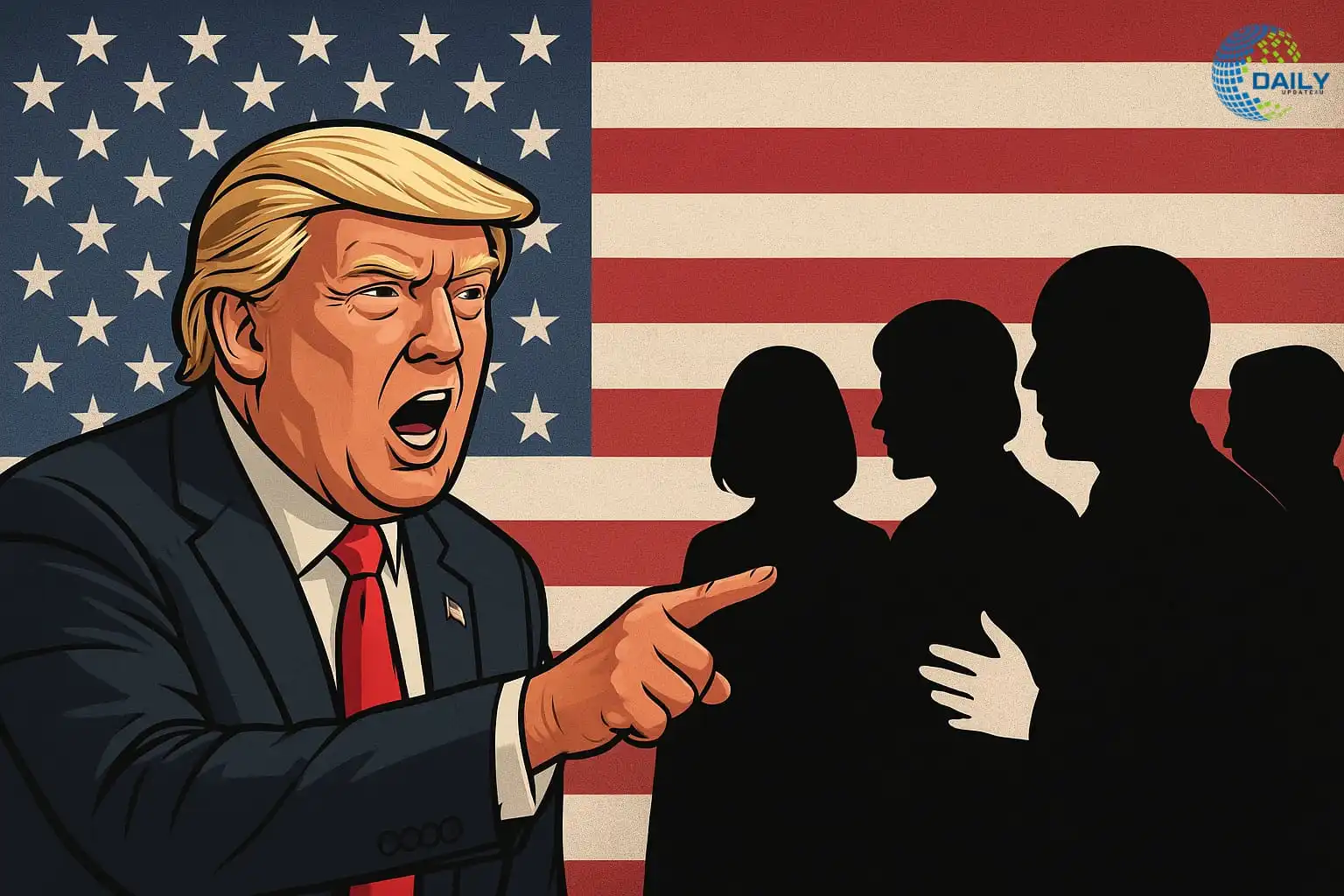
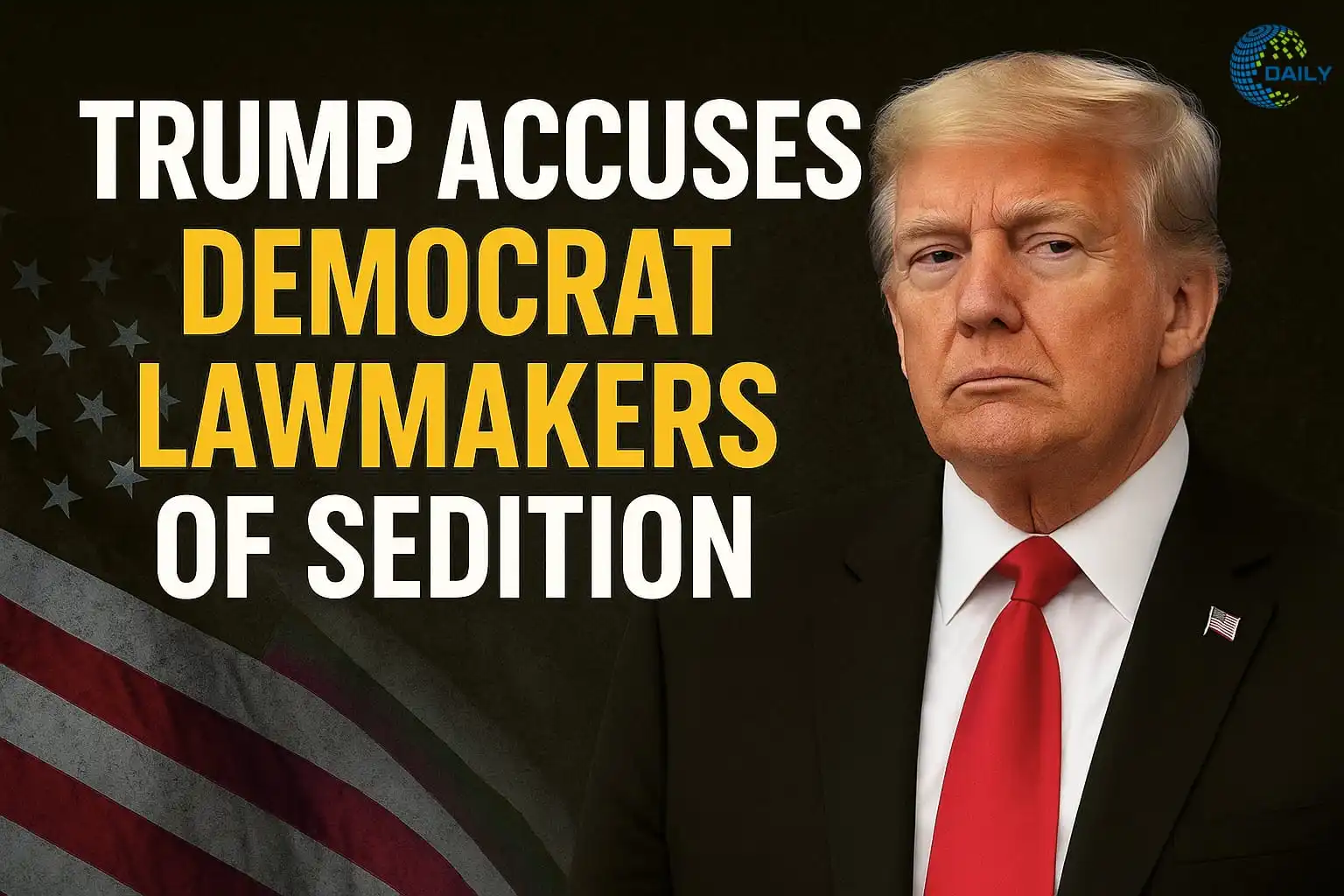
American politics has always been fraught with controversies, disagreements, and sharp accusations; however, recent controversial statements by President Donald Trump against Democratic opposition leaders have further destabilized the political climate. Trump’s remarks, in which he allegedly called some opposition leaders “traitors” and threatened them with severe punishment, even the death penalty, have raised serious questions about America’s political system, democratic values, and the spirit of the Constitution.
Today, “political extremism” in America has reached new heights. The public, the media, the judiciary, and the international community are all watching this conflict closely. The question is not just about a single statement, but about the democratic culture that has long been considered a model for democracies around the world.
➡️ What is the incident? How did the controversy begin?
According to media reports, President Donald Trump recently used social media to label some prominent Democratic leaders as “traitors,” warning them of harsh penalties. This statement came amidst ongoing debates on national security, war policy, and decisions related to the Ukraine-Russia conflict. Trump indicated that these leaders were allegedly acting “against the interests of America” and that “crimes like treason” deserve punishment.
The statement caused an uproar in American politics as soon as it became public.
Opposition parties called it a blatant attack on the democratic structure.
Several Republican leaders also considered it unsettling and dangerous.
The media and human rights organizations accused him of inciting political violence.
This controversy has become the focus of a deep debate not only about communication but also about governing style and the use of power.
➡️ Legal and Constitutional Questions
The First Amendment of the U.S. Constitution guarantees every citizen freedom of expression, but speech that incites violence, riots, or murder is considered a crime under the law.
Following Trump’s recent statements, these questions are being raised:
Does a president have the right to threaten his political opponents with death?
Is this an abuse of power? Could this encourage fascist tendencies?
Isn’t criminalizing the democratic opposition an attack on democracy?
Legal experts are also emphasizing that such language could incite supporters to violent action, as seen in the January 6, 2021, Capitol Hill riot.
➡️ Why is political tension escalating?
Polarization in the US has increased rapidly in recent years. Trump supporters and opponents have divided into two distinct camps. Politics has now moved beyond ideas and become a struggle for identity and power.
Key reasons for increased political tension:
Reason Description
Aggressive behavior of staunch supporters, Emotional incitement on social media, and at political rallies
Proximity of elections: Impact of rhetoric in the 2025-26 election cycle
Conflict between nationalism and liberalism. The “America First” policy has created new controversies
Media polarization: Partisan coverage further divides society
Foreign policy pressures the Ukraine-Russia war and international relations
Trump’s politics have consistently been characterized by an “us versus them” mentality, which has exacerbated the conflict.
➡️ Opposition’s reaction
Democratic lawmakers called it a direct attack on democracy. Several prominent leaders issued strong statements:
Mark Kelly — “We are not going to be intimidated by threats.”
Amy Klobuchar — “The language of violence is leading politics down a dangerous path.”
Many leaders demanded clear action from the Supreme Court.
The opposition also stated that if the president criminalizes dissent, democracy will end and a dictatorship will begin.
➡️ American public’s reaction
The public appears divided into three groups:
✅ Supporters
Believe Trump is protecting national interests
Consider the opposition “traitors”
Support strong measures
✅ Opponents
See it as a threat to democracy and freedom
Fear that political violence in America could increase again
Accuse Trump of abuse of power
✅ Neutral
Tired of the political conflict
The general public wants solutions to inflation, economic crisis, jobs, and security
➡️ International Perspective
The United States is considered the world’s most influential democracy. Signs of unrest in its democratic process are causing concern worldwide. International experts are saying that:
This situation could affect American stability and global leadership.
America’s image appears to be weakening.
China, Russia, and other rival countries could exploit this politically.
➡️ Could the Situation Turn Violent?
According to political analysts, the 2025-26 election season could be the most contentious yet. Crowd-based politics, a gun culture, and incitement on social media could trigger violence at any moment.
Several security agencies have also warned of potential riots and attacks.
➡️ The Biggest Question Facing Democracy
The fundamental question now facing America is:
“Can democracy be suppressed by the pressure of power?”
Opposition is essential in a democracy. Questioning is a right. Disagreements are not treason. If death threats are issued over political dissent, then democracy exists only in name.
➡️ Conclusion
Donald Trump’s threatening statements have pushed American politics in a new and dangerous direction. This is not just a matter of controversial rhetoric, but a question about the very soul of democracy. If political opponents are labeled traitors and power begins to operate based on violence or threats, the democratic system will collapse.
The next few months will be crucial for America. They will determine whether America will uphold its core democratic values or descend into the darkness of extremism and tension.