 dailyupdate4u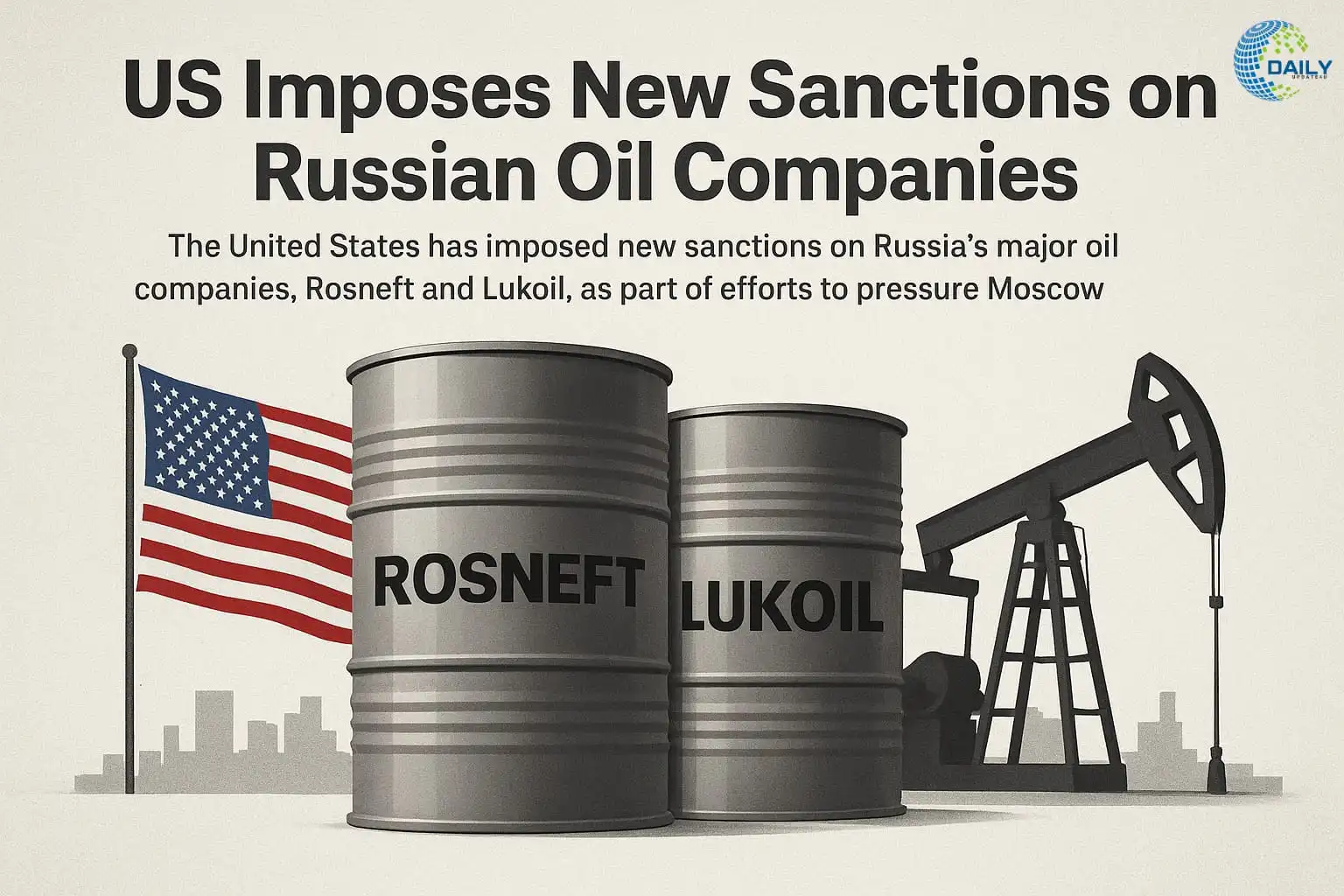
International political tensions have once again escalated. The US has imposed new and tough economic sanctions on two major Russian oil companies, Rosneft and Lukoil.
The US administration states that Russia has not yet taken any serious steps to end the Ukraine war. Therefore, it is now necessary to increase economic pressure on Russia.
These sanctions could have a profound impact not only on Russia’s economy but also on the global oil market, energy supplies, and diplomatic relations.
➡️ The Russia-Ukraine War and US Strategy
The war between Russia and Ukraine has now been going on for more than three years.
Initially, it was merely a border dispute, but it soon escalated into a full-scale war in which Western involvement increased.
The US and its allies—such as Britain, Germany, France, and Canada—have consistently exerted military, economic, and diplomatic pressure on Russia.
Several rounds of sanctions were imposed previously, but action against Russia’s oil companies, which are the backbone of its economy, had been limited so far.
Oil and gas exports constitute 40% of Russia’s economy.
For this reason, the US has now directly attacked oil companies.
➡️ Which companies are under sanctions?
The US Treasury Department said in an official statement that this step was taken to “weaken Russia’s war machine financially.”
✅ Rosneft Oil Company
This is Russia’s largest state-owned oil company.
Its chairman, Igor Sechin, is considered close to President Vladimir Putin.
The company has an annual turnover of over $100 billion and supplies oil to many countries.
The US stated that no US company will now be allowed to do business with Rosneft.
All of its bank accounts and assets have been “frozen.”
✅ Lukoil OAO
This is Russia’s second-largest private oil company.
Its network extends across Europe, Asia, and the Middle East.
According to the US administration, this company is indirectly funding the ongoing war in Ukraine.
Therefore, the same economic sanctions have been imposed on it.
➡️ Nature of Sanctions
The new sanctions imposed by the US include:
✅ Prohibiting US banks from any transactions with these companies.
✅ Blocking these companies’ international assets.
✅ Warning any US or allied company not to do business with them.
✅ Action against individuals who are helping Russia’s oil exports.
These steps could put significant pressure on Russia’s economy, as oil sales are the main source of its foreign exchange reserves.
➡️ What are the US’s intentions?
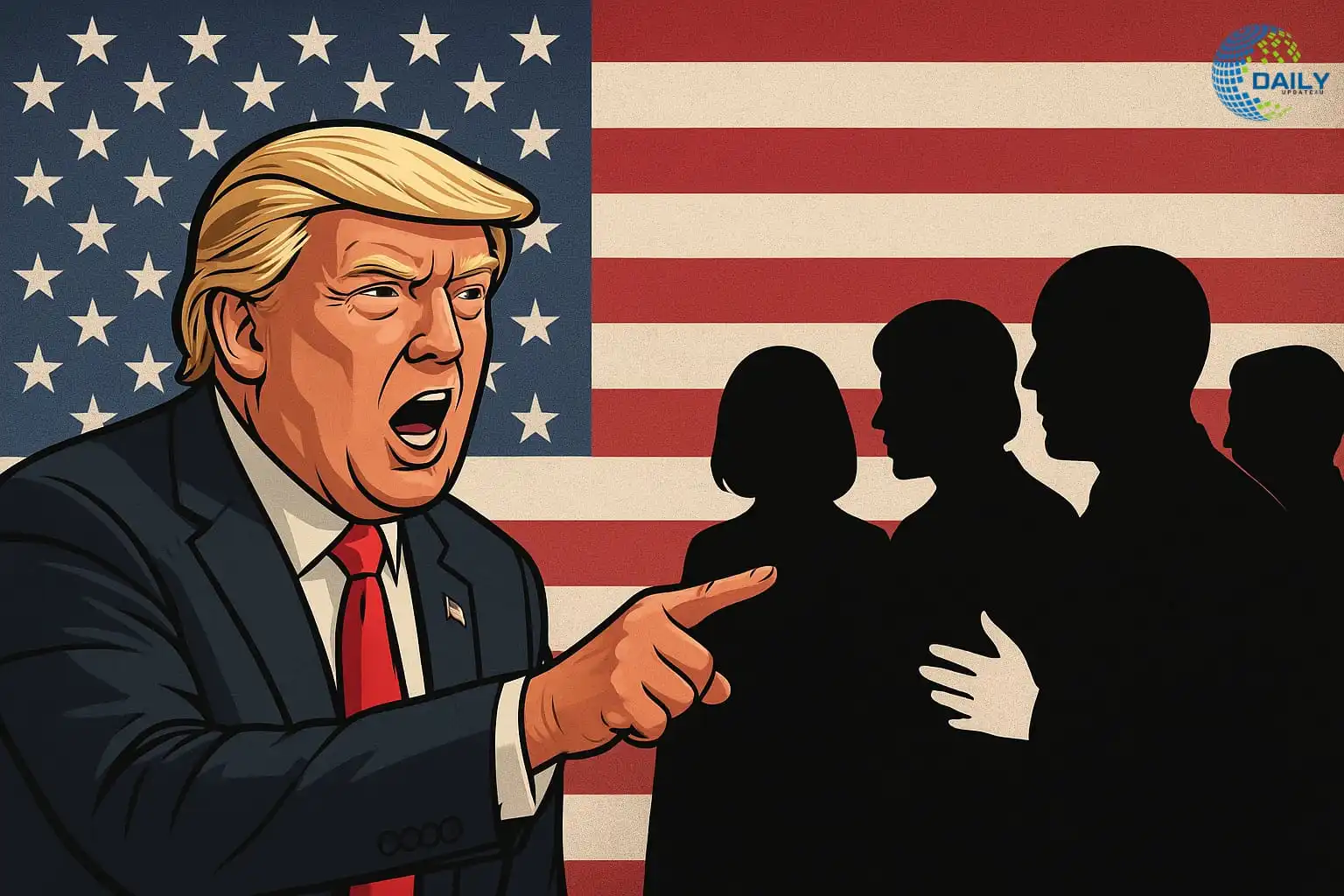
US President Donald Trump (in his 2025 term) said:
“We will not give Russia any respite until it takes concrete steps to restore peace in Ukraine.”
This statement clearly demonstrates the US’s pursuit of a policy of economic coercion against Russia.
This move is not only an alternative to military pressure but also strengthens America’s image as a global leader.
US policy experts believe that
Russia’s oil revenues will decline,
Its military supplies will be affected,
and the domestic economy will be plunged into recession.
➡️ Impact on the Global Oil Market
Russia is the world’s third-largest oil producer.
Sanctions against it could directly impact global oil supply and prices.
Crude oil prices in the international market have already surpassed $95 per barrel.
Experts say that if Russia’s supply decreases further, this figure could reach $110–120 per barrel.
This will increase fuel inflation pressure on countries like Europe, Asia, and especially India.
➡️ Russia’s Response
Russia has described these US sanctions as “economic terrorism.”
The Russian Foreign Ministry stated, “The US is compromising global energy security for its political interests.”
Russia has also stated that it will shift its oil trade from the dollar to other currencies, such as the yuan (China) and the rupee (India).
➡️ India’s Response: “Attempting to Maintain Balance”
Following these new US sanctions, India’s diplomatic balance has once again been put to the test.
India has been purchasing cheap crude oil from Russia, which meets the country’s energy needs.
➡️Importance of India-Russia Oil Trade
Russia has now become India’s second-largest oil supplier.
In 2023–24, India imported approximately 90 million tons of crude oil from Russia.
This accounts for approximately 38% of India’s total oil needs.
If the new US sanctions impact trade with Russia, India will have to find alternative suppliers.
However, India has not yet issued any official statement on this matter.
➡️ Foreign Ministry’s Response
A spokesperson for India’s Ministry of External Affairs stated, “India will make decisions based on its national interests. Energy security is a top priority for us.”
This essentially means that India will maintain balanced relations with both the US and Russia for the time being.
➡️ China’s Response: Strengthening Partnership with Russia
China has strongly criticized these US moves.
The Chinese Foreign Ministry stated, “The US is endangering global energy stability with its unilateral decisions.”
➡️ Growing Russia-China Closeness
Russia already supplies a significant portion of China’s oil and gas.
Now that Western countries have turned their backs on Russia, the partnership between China and Russia is deepening.
The two countries recently signed a trade agreement in yuan, weakening the US dollar’s grip.
This move is believed to be aimed at mitigating the impact of US sanctions.
➡️ Europe’s position: “A difficult but necessary decision”
The European Union has supported the US move, but there are differences within itself.
Many European countries are already facing an energy crisis.
✅ Oil and gas shortages in Europe
Energy prices in Europe have risen after supplies from Russia decreased.
Countries like Germany, Italy, and Poland are working to find alternative suppliers.
But this challenge could become even more difficult during the winter season.
⏺️ EU foreign policy chief Josep Borrell said
“We had to take this decision under difficult circumstances, but it was necessary to respond to Russia’s aggression.”
➡️ Impact on the global economy
The growing tensions between Russia and the US are directly impacting the global economy.
✅ Oil prices surge
Oil prices in the international market have reached close to $100 per barrel.
This poses a risk of rising inflation.
Petrol and diesel prices may rise in emerging countries like India, China, and Indonesia.
✅ Currency Market Volatility
The US dollar has strengthened, while the ruble and euro have come under pressure.
Investors are now turning to safe-haven assets like gold and Bitcoin.
✅ Stock Market Impact
US and European stock markets have declined.
Shares of energy companies have risen, while the tech and auto sectors are under pressure.
➡️ Will Russia be able to recover?
Russia has faced several rounds of sanctions before.
But this time the situation is different—because these sanctions are focused on the oil and energy sectors, which are the backbone of its economy.
✅ Russia’s Potential Strategies
⏺️ Exploring Alternative Markets—Russia will now focus on new markets like Asia, Africa, and Latin America.
⏺️ Trade in Rupees and Yuan — will reduce dollar dependence and promote payments in other currencies.
⏺️ Encourage domestic investment. The Russian government may increase subsidies to its industries to ensure continued production.
Russian economists say that
“If global oil prices remain high, Russia can maintain stable revenues despite sanctions.”
➡️ Experts’ Opinions
Many international experts have described this move as a “political maneuver.”
American policy analyst Michael Hudson says:
“This will impact not only Russia, but the entire global energy structure.”
Russian economist Alexei Kuznetsov says:
“The West hopes Russia will succumb economically, but history shows that Russia can survive long-term sanctions.”
➡️ Potential Impact on India
This situation poses a double challenge for countries like India.
On the one hand, there is pressure from the US to reduce oil purchases from Russia,
On the other hand, India has to consider both its energy security and inflation control.
If cheap oil from Russia ceases, India will have to purchase oil from the Middle East or the US, which is more expensive.
This could increase petrol and diesel prices,
and impact domestic inflation.
India is currently adopting a “wait and see” policy.
➡️Long-term impact and changes in global politics
✅Long-term consequences of sanctions
These sanctions imposed by the US on Russian oil companies are not just a short-term political move,
But their long-term economic and strategic impact will be felt throughout the world.
➡️ Changes in the Energy Supply Chain
Countries will now adopt policies of not relying on a single source.
Europe is already exploring alternative oil sources from the Middle East, Africa, and the Americas.
Asian countries such as India, China, Indonesia, and Vietnam are increasing their energy storage.
This means that the geography of global oil trade could completely change in the coming years.
➡️ Challenge to the Dollar’s Global Hold
Russia and China are already working to reduce their dependence on the dollar.
Now that the US has used the financial system as a “political weapon,”
Many countries are beginning to look for alternatives to the dollar.
Russia-China trade is now conducted in yuan.
A portion of India-Russia transactions is conducted in rupees.
The BRICS group is also considering its own common currency.
If this trend continues, the global dominance of the US dollar could weaken in the coming decade.
➡️ Restructuring of Global Alliances
This economic war between the US and Russia is no longer confined to just two countries.
It is gradually moving towards a new global polarity.
On one side are the US, Europe, Japan, and Australia;
On the other side are Russia, China, Iran, and some Asian allies.
This division could lead to a new Cold War-like situation in the 21st century.
➡️Is this the beginning of a “New Cold War”?
Analysts believe that the world has now entered the era of Cold War 2.0.
However, this will involve economic and technological warfare, rather than conventional weapons.
✅ Cold War 1.0 vs. Cold War 2.0
Aspects Old Cold War (1947–1991) New Cold War (after 2025)
Major Parties US vs. Soviet Union US vs. Russia + China
Weapons, Nuclear and Military Power, Economic, Digital, and Energy Sanctions
Sphere of Influence: Europe and Asia, Worldwide, especially Asia and Africa
Objectives: Ideological Battle for Resources and Dominance
Oil, gas, technology, and currency have become the most powerful weapons in this new competition.
➡️ Russia’s New Strategy: “Leaning East”
Following US sanctions, Russia is now clearly turning east.
This means strengthening its ties with Asia, the Middle East, and Africa.
✅ Key Steps
⏺️ Increasing Investment in Asian Countries — Russia will now invest in energy projects in countries like India, China, and Vietnam.
⏺️ Strengthening presence in Africa — Russia recently signed energy agreements with 10 African countries.
⏺️ Currency diversification — Trade in yuan, rupee, and riyal is now preferred over the dollar.
Russia’s objective is clear
“To break free from the clutches of US economic sanctions and create a multipolar world.”
➡️ US Strategy: Pressure and Maintaining Leadership
The US seeks to achieve two objectives through these sanctions
✅ To exert economic pressure on Russia so that it yields in Ukraine.
✅ And to maintain itself as a “global leader” so that the world follows its decisions.
But the challenge is that the world is no longer the same.
Many countries are now adopting independent policies, which is a matter of concern for the US.
➡️ Expert Analysis
Many global analysts say this is just the beginning.
In the future, conflict between the US and Russia may escalate in areas such as technology, space, and cybersecurity.
➡️International politics expert Stephen Walt writes
“The US is forgetting that every sanction also hurts its allies,
because the global economy is interdependent.”
Meanwhile, Russian strategist Sergey Karaganov says:
“The West is no longer what it once was.
Russia will chart its own path and form new alliances with Asia.”
➡️ Impact on the Common People
This conflict will not be limited to governments or companies.
It will also impact ordinary citizens—
fuel prices will rise,
Inflationary pressures will increase,
International flights and freight costs will increase,
and global markets will remain volatile.
In developing countries like India, this will directly impact food and transportation costs.
➡️What’s Next?
Experts see three possibilities for the future:
✅ Peaceful resolution — If Russia and Ukraine reach an agreement, sanctions could be eased.
✅ Protracted economic war — If Russia doesn’t back down, the US and Europe will increase pressure.
✅ New global order — The strengthening of Asian countries could lead to a multipolar balance of power in the world.
➡️ Conclusion
These US sanctions on Russian oil companies are not just economic measures;
They will reshape global politics, the economy, and the energy system in the coming years.
Russia’s economy will certainly suffer a setback, but it has recovered from many crises before.
For the US, this is a “risky bet”
Because the more it suppresses Russia, the more the world is moving away from the dollar.
Ultimately, this conflict reminds us that
“The world has now entered a new era where wars are fought not just with guns, but with oil, trade, and technology.”